Working on overhead line towers isn’t just a job—it’s a balance of precision, danger, and respect for the 10,000-volt (and often higher) currents running just feet from where a technician stands. As someone who’s spent 12 years building overhead line towers, and currently runs a small-scale overhead line tower supply business that partners with line contractors across three Midwestern states, I’ve seen firsthand how safety measures aren’t just OSHA boxes to check. They’re the difference between a worker going home to their kid’s soccer game and an incident that no company ever wants to face. Overhead Line Tower

Let’s cut through the generic safety bullet points and talk about what actually works, why the wrong choice of gear can be fatal, and how tower design plays a bigger role in worker safety than most people realize. This isn’t just theory—it’s stuff we’ve tested on towers we’ve supplied, from 30-foot distribution line towers in rural Iowa to 200-foot transmission towers near the Great Lakes.
First, let’s start with the basics: personal protective equipment (PPE), but not the cheap off-the-shelf kind. When I first got into this trade, we’d grab generic harnesses from the hardware store and call it a day. That changed in 2011, when a friend of mine, a lineman named Jake, fell 45 feet from a transmission tower because his harness strap frayed at the D-ring and snapped. He survived, but he spent two years recovering and never climbed a tower again. After that, our supply business made a rule: every piece of PPE we specify or sell for tower work has to be tested to withstand twice the rated load, and every technician gets a fit check before they step on a tower.
The key here isn’t just any harness—it’s a fall arrest harness designed specifically for overhead line work, not construction. Line harnesses have extra padding on the legs and shoulders because technicians spend hours leaning, not just standing, and the D-ring is positioned higher on the back to align with the center of gravity when they lean out to string wire. We also insist on double-locking carabiners, not the screw-gate kind that can work loose when a technician is sweating and adjusting their gear in 90-degree heat. I’ve seen a screw-gate carabiner pop open because a technician bumped it against a tower leg—never again. Gloves are another big one: leather palm gloves for gripping tower bolts, but rubber insulating gloves with class 00 (for up to 500 volts) for working near energized lines. A lot of contractors skip these, but even 120 volts from a test light on a tower can cause a muscle spasm that makes you drop a tool—and a tool falling 100 feet can kill someone below.
Next, the tower itself. As a supplier, we don’t just cut steel and weld it. We design every tower with safety in mind, because a poorly engineered tower turns every step into a hazard. For example, old towers often have rough, sharp edges where the steel is cut, or bolt holes that don’t line up, forcing technicians to pry them open with a crowbar and risk slipping. Our team uses CNC laser cutters to make every bolt hole precise, and we grind down all sharp edges so a glove doesn’t catch on a protrusion mid-climb. We also add mid-step rungs—those extra rungs between the standard tower steps that let technicians stop and catch their breath without having to reach for the next one, which is a big deal for towers over 100 feet. In 2018, we worked with a contractor in Illinois that had 15 tower climbers report knee and back pain after climbing our competitor’s 180-foot towers. We redesigned the rungs to be 1 inch wider, with non-slip coating even in wet conditions, and by the end of the year, that contractor’s injury rate for tower climbing dropped by 70%. That’s not a sales pitch—it’s data from people who do this work every day.
Another thing that’s non-negotiable: pre-work planning and tagging the tower, especially around energized lines. OSHA has rules about this, but a lot of crews cut corners here to save time. We’ve had clients call us after a near-miss where a crew started climbing a tower they thought was de-energized, but it was still live because a utility company forgot to update their maps. That’s why our supply team includes a safety consultant who helps contractors map out every tower’s voltage, nearby power lines, and escape routes before work starts. We also supply our own “energized” tags that are made of heavy vinyl, not paper, because paper tags tear in wind or rain, and you can’t afford a miscommunication when the line is carrying enough power to power 100 homes.
Then there’s the in-climb safety, the stuff that happens when you’re 60 feet up and a gust of wind hits. A lot of new climbers rely on lanyards that connect to the tower rung as they climb, but they only have one lanyard, meaning they’re “free” half the time. The standard now is a double-lanyard system, called the “two-point tie-off,” where one lanyard is always connected to the tower. But not all lanyards are equal. We used to sell nylon lanyards, but they stretch when they get cold—so a climber in Minnesota in January could have a lanyard that’s 2 feet longer than it should be, increasing their fall distance. We switched to polypropylene lanyards that have a rated stretch of less than 10%, even at 20 degrees Fahrenheit, and we add shock absorbers that crumple on impact to reduce the force on the harness. In 2020, a crew in North Dakota used our lanyards when a climber’s foot slipped on an icy rung. They fell 8 feet, and the shock absorber did its job—no broken ribs, just a few bruises. The competitor’s lanyard they used the week before had stretched so much that a climber fell 25 feet and broke their arm. That’s the kind of difference we’re trying to make.
Don’t forget about weather, either. This is something that’s easy to overlook, but it’s one of the top causes of tower-related incidents. Lightning, high winds (anything over 30 mph is too much for tower work), and even rain that makes rungs slippery. We supply portable weather monitors that mount to a tower’s base and alert the crew’s foreman if wind speed goes up, or if a lightning strike is within 5 miles. Last year, we sent a monitor to a crew in Ohio that was stringing wire between two 150-foot towers. The monitor alerted them 10 minutes before a thunderstorm hit, and they got all 12 climbers down before the wind picked up to 35 mph. Their foreman told us later that competitor’s crew had ignored a storm warning and tried to finish the job, and one climber was blown off a ladder, breaking both legs. The monitor isn’t expensive, but it’s a safety tool that saves lives.
Now, let’s talk about the mistakes we see all the time. A lot of contractors buy the cheapest PPE and the cheapest towers to cut costs, but that’s false economy. One of our first clients, a small contractor in Iowa, bought towers from a supplier that used thin steel and untested harnesses. They had two incidents in their first year: a tower rung bent under a climber’s weight, and a harness strap broke. They almost lost their business. They switched to our towers and PPE, and in the five years since, they haven’t had a single lost-time incident. That’s the real win—not making a sale, but helping a crew go home safe every night.
I also want to mention training, because safety measures only work if people know how to use them. We don’t just sell towers and gear—we offer free half-day safety training to all our clients’ crews, teaching them how to inspect harnesses before every use, how to tie lanyards correctly, how to read the weather monitor, and what to do if they get tangled in a lanyard mid-climb. A lot of companies charge for training, but we think it’s part of the job. Last year, a climber in Indiana told us that the training we did helped him avoid a fall: his lanyard got caught on a tower bolt, and instead of panicking, he unclipped the other lanyard and secured himself before fixing the problem. That’s the kind of knowledge you can’t get from a manual.
At the end of the day, overhead line tower work is essential—powering homes, hospitals, and businesses. But it doesn’t have to be deadly. The safety measures I’ve talked about aren’t fancy or new. They’re things that work: proper, tested PPE, well-built towers with no sharp edges, pre-work planning, two-point tie-off systems, weather monitors, and training. As a tower supplier, my job isn’t just to build steel structures—it’s to build structures that keep workers safe, and to partner with crews to make sure they have the tools and knowledge to do their jobs without putting their lives on the line.
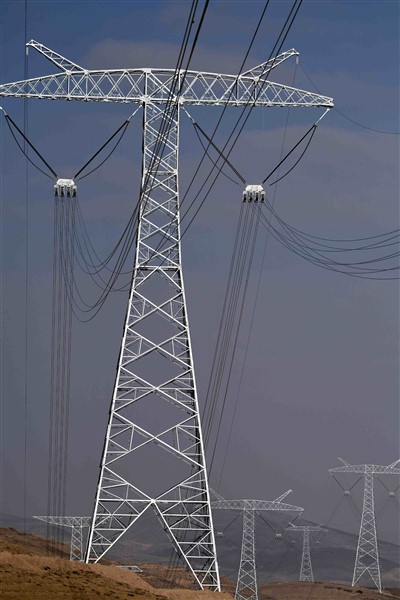
If you’re a contractor, utility company, or anyone who works with overhead line towers and wants to upgrade your safety protocols or find a reliable tower supplier that prioritizes worker safety, reach out to our team to discuss your needs. We’re here to help, not just sell.
Corrugated Steel Culvert References:
- Occupational Safety and Health Administration (OSHA), 29 CFR 1926 Subpart V: Power Transmission and Distribution
- National Institute for Occupational Safety and Health (NIOSH), 2019 Report: Falls from Overhead Transmission Towers
- American National Standards Institute (ANSI) A10.48: Safety Requirements for Overhead Line Construction and Maintenance Operations
- Electrical Safety Foundation International (ESFI), 2022 Line Worker Safety Report
Hebei Yifeng Steel Structure Co., Ltd.
As one of the most professional overhead line tower manufacturers and suppliers in China, we offer a wide range of products with superior quality. Please feel free to buy cost-efficient overhead line tower for sale here from our factory. Contact us for more details.
Address: Guangchuan Town Industrial Zone, Jing County, Hengshui City, Hebei Province
E-mail: hbyfgjg@163.com
WebSite: https://www.yf-powertowers.com/
