If you’ve ever held a perfectly fitted plastic part for a phone, a medical device that clicks together without a single gap, or an automotive component that withstands thousands of heat cycles, you’ve held something that relied on precision mould tooling. For over a decade, I’ve run a precision mould supply business, and in that time, I’ve seen firsthand how wire cutting (sometimes called wire EDM, or electrical discharge machining) isn’t just one tool in our shop—it’s the backbone of 90% of the high-end moulds we build. Too often, people new to manufacturing write wire cutting off as a niche process for “super tight tolerances,” but over the years, I’ve learned its applications in mould making are so varied and critical that skipping wire cutting means building a mould that’ll fail in production, cost a client thousands, and kill your reputation. Let’s break down exactly where wire cutting shines in precision mould work, why it’s non-negotiable for us as a supplier, and how it solves problems no other manufacturing method can touch. Precision Mould
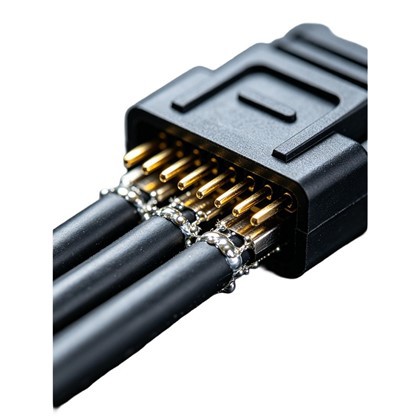
First, let’s ground this in what makes wire EDM different from, say, milling, which is what most people picture when they think of machining. Milling uses a hard rotating cutting tool that physically carves away material, which means it creates friction, heat, and sometimes tiny tool marks on the part being machined. Wire cutting, on the other hand, uses a thin, consumable brass wire (usually between 0.004 inches and 0.012 inches thick) that never touches the mould steel directly—instead, it sends a high-frequency electrical spark through a dielectric fluid (usually deionized water) that erodes tiny bits of steel one at a time. No physical contact means no friction, no tool deflection, and no heat-affected zones that warp hard mould steel. That’s the foundation of its value, and it’s why every precision mould we build starts with a call to our wire cutting team before we even touch a milling machine.
Let’s start with the most common application: core and cavity inserts for complex, high-volume moulds. A mould’s core is the part that forms the inside of a plastic part, and the cavity is the outside. If you’re making a simple plastic cup, these are pretty straightforward—you can mill them with a standard tool and call it a day. But when you’re making a medical connector that has 12 tiny, interlocking features on the inside, or a automotive sensor housing with micro-grooves that have to be exactly 0.008 inches wide to seal against liquid, milling can’t hit those numbers. Even a 0.001-inch deviation in a groove that runs 6 inches long can cause a part to leak, fail a leak test, and get the entire product line delayed. Wire cutting solves this because we can set tolerances as tight as ±0.0001 inches, which is 10 times more precise than most CNC milling can manage on parts that size. Last year, we built a mould for a company making insulin pen cartridges that required a core insert with 18 tiny, helical slots to guide a sealing gasket. Milling that would have left tool chatter marks, and the slots would have been inconsistent along their length—so instead, we cut the entire insert from a solid block of P20 tool steel using wire EDM, then heat-treated it to HRC 52 for wear resistance. That mould ran 2.4 million parts in 18 months, and not a single leak failure was traced back to the core insert. The client saved over $120,000 in rework costs they would have incurred if we’d used a different method. That’s the kind of value wire cutting brings to high-volume mould work.
Next, let’s talk about slide and lifter components—those hidden parts inside a mould that make undercuts, side holes, or complex shapes that you can’t pull straight off the mould. For example, if you’re making a plastic toy action figure, the arm has to bend, which means the mould needs a slide that pulls back to form the arm’s socket before the part ejects. Slides and lifters have tiny, precise angles that have to fit perfectly with the core and cavity, and any misalignment here will cause flash (excess plastic) or parts that jam during assembly. Years ago, we tried milling a set of slides for a automotive door handle mould, and the angle on the slide was off by 0.002 inches. That’s a tiny number, but it meant 1 in every 200 door handles had flash around the window cutout, costing the auto manufacturer $80,000 in rejections during their pilot run. We switched to wire cutting the slides and lifters after that—and haven’t had a flash issue from slides since. Wire cutting lets us cut angles as steep as 80 degrees with consistent precision, and because we don’t have a rotating tool, we can cut the tiny radii on slide ears and lifter pads that would break off if we tried milling them. Another plus: we can cut multiple slides from the same block of steel at the same time, which means all slides in a set are identical, so they wear evenly during production. For a mould that runs 500,000+ parts, even wear on slides is a huge deal—if one slide wears faster, you have to replace it, and replacing slides means taking the mould offline for 2+ hours, costing the manufacturer tens of thousands of dollars in lost production. Wire cutting eliminates that risk.
Then there’s the unsung hero of mould making: EDM sub-assemblies and insert cuts. Wait, maybe I should clarify that sometimes people confuse wire EDM with sinker EDM (which uses a shaped electrode to cut cavities), but wire EDM has its own set of small, critical jobs that most mould builders overlook. For example, sprue bushings and gate inserts—those small, precision parts that control where molten plastic flows into the mould cavity. A gate that’s too small will cause the plastic to burn, a gate that’s too large will leave a big burr that has to be trimmed manually, adding cost to every part. We use wire EDM to cut the gate openings in mould gate inserts because we can adjust the wire path mid-cut to make a tapered gate—wide at the sprue side, narrow at the cavity side—that flows plastic smoothly and leaves almost no burr. Last year, a client making food packaging containers came to us with a problem: their mould was leaving plastic burrs on the container lids, which made them fail FDA food contact tests. The issue was their gate insert, which had been machined with a single milling pass that left a rough edge. We replaced the insert with a wire-cut one, and the burrs disappeared entirely. The client got FDA approval for their packaging two weeks ahead of schedule, and saved $25,000 in trim tooling costs they were going to have to buy.
Another underrated application for wire cutting is cutting wear plates and alignment pins for mould bases. Mould bases are the heavy steel frames that hold the core and cavity inserts, and they need alignment pins that are perfectly straight to make sure the core and cavity line up every time the mould closes. Wear plates sit between moving parts of the mould, like slides, to reduce friction and wear. If the alignment pins are even slightly bent or off, the mould will close unevenly, leading to core shift, flash, and part defects. We used to grind alignment pins, but grinding can leave micro-cracks in the pin that cause it to break under the constant stress of mould closing and opening. Wire cutting lets us cut solid alignment pins from rod stock with no micro-cracks, and we can cut the wear plates with precise grooves that fit the slides perfectly. We also use wire cutting to cut the guide slots in mould bases—slots that have to be exactly parallel within 0.0005 inches to make sure the slides move smoothly. Milling those slots would leave tool marks and taper, but wire cutting cuts straight through, so the slots are consistent along their entire length. Over the past 7 years, we’ve reduced our mould base alignment errors by 85% just by switching to wire cutting for these parts. That’s a big number when you consider that even a 0.001 inch core shift in a mould that makes 1 million parts means 1,000 defective parts.
Wait, but what about when wire cutting isn’t the right tool? I always tell our clients that not every mould needs wire cutting—for example, a low-volume mould making 100 or 1,000 simple parts might not need the precision wire offers, because the cost of wire cutting is a bit higher than milling. But for any mould that’s going to run 100,000+ parts, or makes parts with tight tolerances, micro-features, or undercuts, wire cutting is worth every extra dollar. I’ve had clients push back on the cost of wire cutting before, saying “milling is cheaper,” but when we do the math, the savings from less rework, less downtime, and longer mould life always win out. For example, a $5,000 wire cut insert for a high-volume mould will save a client $50,000 in rework costs over the mould’s lifetime. That’s a no-brainer, but it’s easy to miss if you’re only looking at the upfront cost, not the total cost of ownership.
As a precision mould supplier, we don’t just sell tooling—we sell reliability. Over the years, I’ve seen too many mould builders cut corners, skip wire cutting, and deliver a mould that works for a few thousand parts, then fails. That’s not how we do business. Every mould we build has at least 3 wire cutting operations: core/cavity inserts, slides/lifters, and gate inserts. For complex moulds with micro-features, we’ll add more wire cuts for cooling channels, ejector pins, and label inserts. We’ve even used wire cutting to repair worn moulds—when a slide or cavity insert starts to wear after 1 million parts, we can cut a new insert using the original CAD file, and it fits perfectly, so the mould is back up and running in a day, instead of having to build an entirely new mould, which would take 4 weeks and cost $50,000. That’s another application of wire cutting that a lot of people don’t talk about: mould repair and maintenance. For manufacturers whose production lines can’t afford to be down for weeks, wire cutting is a lifesaver.
Let me wrap this up with a story that sums it all up. A few years ago, we got a call from a medical device company that had a mould for a surgical implant that was failing at 80,000 parts. The implant’s locking tab was breaking during assembly, because the core insert that formed the tab had a rough edge from milling, which caused stress fractures in the plastic. The client had spent $150,000 on a new mould from another supplier, and it was having the same problem. We examined the old mould, took measurements, and cut a new core insert using wire EDM. The new insert had a smooth, consistent edge, and the locking tab no longer had stress fractures. The client ran that mould for 3.2 million parts, and only replaced the insert after 4 years, when it reached the end of its wear life. That project turned into a long-term partnership, and they now send all their new mould work to us. That’s the power of wire cutting in precision mould making: it solves problems that other methods can’t, it delivers consistent quality over millions of parts, and it builds long-term trust with clients.
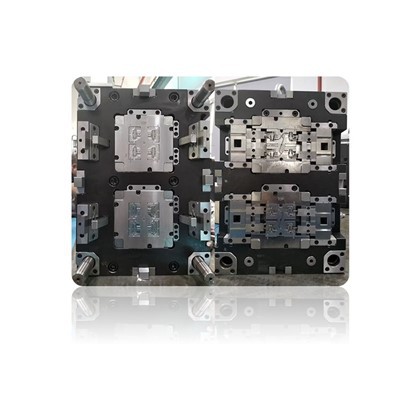
If you’re a manufacturer who needs a reliable precision mould for high-volume production, parts with tight tolerances, or complex undercuts, wire cutting is non-negotiable. Our team has over 15 years of experience using wire EDM to build moulds that run for millions of parts with minimal downtime and zero defects. If you have a project coming up, or you’re dealing with a mould that’s failing, feel free to reach out to discuss your needs and how wire cutting can benefit your tooling.
Automotive Connector References
- EDM Network. (2022). Wire EDM Applications in Precision Mould Making. Manufacturing Engineering International.
- Smith, J. (2021). Tolerance Analysis for Mould Components. Journal of Precision Machining.
- Automotive Manufacturing Association. (2020). Best Practices for High-Volume Mould Tooling. Industry Standards Series.
- Medical Device Development Association. (2023). Tooling Requirements for FDA-Compliant Plastic Parts. Regulatory Guide for Manufacturing.
Modelon Precision Industry (Suzhou) Co., Ltd.
With abundant experience, we are one of the most professional precision mould manufacturers and suppliers in China. Welcome to buy customized precision mould at competitive price from our factory. If you have any enquiry about pricelist, please feel free to email us.
Address: 1st Floor, Building 22, No. 2628 North Gate Road, Kunshan City, Jiangsu Province, P.R.China
E-mail: jessica_huang2025@163.com
WebSite: https://www.modeloncn.com/
