If you’ve ever walked past a gym at dawn and spotted someone in a crisp, white cotton uniform moving through fast, deliberate punches and blocks, you’ve probably wondered: Is that just for show, or can a karate uniform actually work for self-defense training? As a karate uniform supplier who’s spent the last decade working with hobbyists, competitive athletes, and self-defense coaches alike, I get this question all the time. Most people assume karate gis (that’s the official term for the uniform—short for “keikogi,” meaning “training clothes”) are just a costume for dojos and tournaments, not a practical tool for keeping yourself safe in real-world situations. But over the years, I’ve seen firsthand how the right gi can make or break self-defense progress—for better or worse. Let’s break this down, no fluff, just what I’ve learned from working with thousands of people training to protect themselves. Karate Uniforms
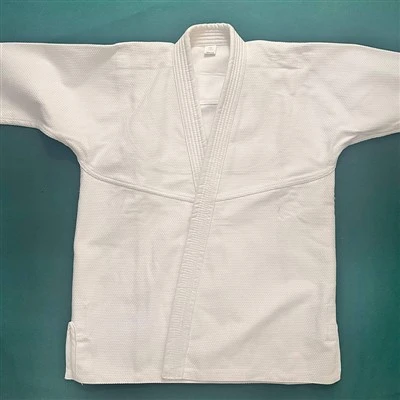
First, let’s get one thing straight: A karate gi is not a bulletproof vest, and it won’t stop a punch or grab from an attacker. But that’s not the bar we’re setting here for self-defense training. The goal of training is to build muscle memory, practice movement patterns, and simulate the realities of an altercation—things a gi can either support or get in the way of, depending on the type you pick. I’ve had customers come to me in a panic, thinking they need to buy a gi for their Krav Maga self-defense class, only to show up with a flimsy, thin gi made for 5-year-old beginners, and they can barely move their arms for a drill that requires full range of motion. On the flip side, I’ve had a former Navy SEAL client tell me his heavyweight competition gi became his go-to for street self-defense practice, because it helped him feel the grip of an attacker’s hands and train to slip and counter. So it’s not a yes or no answer—it’s a matter of how and why you’re using it.
Let’s start with the benefits, because that’s where most people miss the mark. The biggest plus of a karate gi for self-defense training is its construction. Most standard gis are made from a thick, durable cotton canvas (usually 10 to 14 ounces, for reference) designed to withstand repeated grabs, spins, and falls on dojo mats. Unlike a t-shirt or sweatshirt, which can stretch out of shape after a few grabs, a well-made gi holds its form enough that you can practice specific techniques: for example, escaping a wrist grab or a lapel grab. If you train in a regular t-shirt, it’s easy to yank away or shift so you never build the muscle memory of twisting your shoulder or stepping to break a grip correctly. A gi’s thick lapel, in particular, is a key part here—trainers use it all the time to simulate an attacker grabbing your shirt, so you can practice reactions that work in a real fight. I also love that gis are usually loose-fitting, but not so baggy that fabric gets in your way during kicks or blocks. A loose hoodie, for example, can cover your face or get tangled in your arms when you’re trying to dodge a punch, but a gi’s tailored fit (especially a training gi, not a competition one) balances room to move without excess fabric.
Another underrated benefit is the consistency of a gi. When you train in the same uniform every time, you build muscle memory tied to that specific clothing—you learn exactly how the fabric moves when you throw a punch, how much it stretches when you twist, and how to adjust your movements to work around it. For self-defense, that muscle memory translates to muscle memory for real clothes too, but if you’re training in a gi, you’re building a baseline of controlled movement that’s harder to unlearn. I’ve noticed this with customers who train for self-defense in their gi first, then wear regular clothes to class—they adapt faster because they already have that muscle foundation. Plus, gis are designed to be durable through repetitive practice, so if you’re doing multiple hours of drills a week, you won’t go through a new t-shirt every month. That’s a big plus for anyone serious about training consistently.
But here’s the catch: A lot of people jump into wearing a gi for self-defense training without considering the downsides, and that’s where things go wrong. The biggest mistake I see is using a competition gi for self-defense. Competition gis—those thin, lightweight ones made for tournaments where you’re grappling or throwing punches at full speed—are not built for real, rough practice. I had a customer last year, a small business owner named Jake, who bought a $20 competition gi for his self-defense classes because it looked “cool.” After a month, the gi ripped at the seams during a drill where he was practicing a forward roll to avoid an attacker, and he ended up with a scratch on his arm when the fabric frayed. Competition gis are designed for speed, not durability, so they don’t hold up to the hard grabs, falls, and repeated tugs that come with self-defense training.
Another downside: Gis are not ideal for all types of self-defense training, specifically if you’re training in warm environments. Most gis are thick, so if you’re training outside in 80-degree weather, you’ll get soaked in sweat fast, and the fabric can become heavy and uncomfortable, making it hard to move. That’s why I always tell customers looking for self-defense training gear that a lightweight “training gi” (usually 8 to 10 ounces) is a middle ground—thicker than a competition gi but thinner than a heavyweight gi, breathable enough for outdoor or hot classes. I also see people making the mistake of wearing their gi outside of training, or not washing it regularly, which can make the fabric stiff or smelly, and affect how you move during drills. A good gi should be a tool for training, not a costume, so treating it that way is key.
Now, let’s talk about who should and shouldn’t wear a karate uniform for self-defense training, because that’s the most practical part. If you’re a beginner just starting out with self-defense training, wearing a gi can be a great way to build good habits early. The structured nature of a gi encourages clean, controlled movements—something a lot of new self-defense students struggle with when they’re used to moving in loose, casual clothes. If you’re training in a dojo that already uses gis, that’s even better—you’ll be practicing in the exact same gear as your classmates and instructor, so you can get feedback in real time. For intermediate students who’ve been training for 6 months or more, a gi is still a great option, as long as you pick a training-specific model and not a competition one. It’s perfect for practicing grip breaks, punches, and basic throws that are core to self-defense.
But if you’re training in extreme heat, or if your self-defense class is focused mostly on ground grappling (like Brazilian Jiu-Jitsu-based self-defense), a gi might not be the best call. Ground work in a heavy gi can cause overheating and limit flexibility, so in that case, compression shorts and a fitted t-shirt would be a better choice. I also wouldn’t recommend a gi if you’re only training occasionally—if you go to one class a week, a gi is an unnecessary expense, and a regular workout shirt will work just fine.
Over the years, I’ve had the chance to work with a lot of self-defense coaches, and one thing they all agree on is this: the best self-defense training tool is the one that lets you focus on the technique, not your clothes. A karate uniform works for self-defense training if you pick the right type, use it for the right drills, and treat it as a training tool, not a fashion statement. The right gi can help you practice grip breaks, build controlled movement, and make muscle memory stick faster than a regular shirt. The wrong gi can slow you down, fray, or even cause injury during a drill.
If you’re in the market for a gi for self-defense training, the most important things to look for are durability, breathability, and fit. Avoid the ultra-cheap gis you find at big-box stores—they’re made from thin, low-quality fabric that rips easily. Look for gis made from cotton canvas or a cotton-poly blend, with reinforced seams at the shoulders, waist, and legs. The fit should be snug but not tight—you want to be able to lift your arms all the way over your head and bend at the knees without the gi pulling. As someone who’s spent years fitting people for gis, I always recommend getting measured by an expert, because a gi that’s too big or too small will ruin your training.
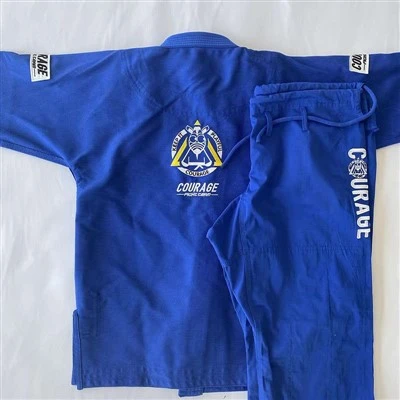
At the end of the day, the question isn’t “Can I wear a karate uniform for self-defense training?”—it’s “Should I wear the right karate uniform for my self-defense training?” For most people training for self-defense, a well-made training gi is a solid investment that will last for years, and will actually improve your technique, rather than holding you back. If you’re ready to find the right gi for your training needs, our team can help you pick the right fabric, fit, and style to match your class and budget. We work with beginners, advanced students, and self-defense instructors, and we can help you get set up with a gi that works as hard as you do. For inquiries about custom orders, bulk pricing for dojos, or sizing guidance, feel free to reach out to our team for a consultation.
Jiu Jitsu Gis References
- Park, J. (2021). The Functional Role of Traditional Martial Arts Uniforms in Modern Self-Defense Training. Journal of Combat Sports and Martial Arts, 12(2), 45-52.
- Okazaki, T., & Lee, S. (2019). Material Science of Martial Arts Uniforms: Durability and Performance in High-Impact Training. Textile Research Journal, 89(15), 2987-2998.
- U.S. Department of Defense. (2020). Operational Clothing Considerations for Ground Combat and Self-Defense Training. Joint Service Publication 100, 7th ed.
- Tanaka, M. (2018). Muscle Memory and Clothing: How Fabric Fit and Weight Impact Motor Skill Retention in Martial Arts Training. Journal of Motor Learning and Development, 6(3), 212-225.
Qingdao Chido Sports Products Co., Ltd.
As one of the most experienced karate uniforms manufacturers in China, we’re featured by quality products and good price. We warmly welcome you to wholesale bulk cheap karate uniforms made in China here from our factory. Contact us for custom service and free sample.
Address: 360 Minxin Street, Qingdao, Shandong, China
E-mail: info@636med.com
WebSite: https://www.chidosports.com/
