Hey everyone, if you’ve ever stood in front of a bag making machine panicking because the plastic or non-woven fabric you’re running is either stretching so tight it’s creasing or sagging so much it’s misaligning, you’re not alone. As a bag making machine supplier, I talk to plant managers and machine operators every single day who struggle with tension issues—9 out of 10 times, it’s not a broken part, it’s just not adjusting tension right. Today I’m breaking this down like I do for my regular customers, no fancy jargon, just real, actionable steps that work. Bag Making Machine

First off, let’s get one thing straight: tension control isn’t one-size-fits-all. The material you’re using (thin LDPE, thick PP, non-woven, even laminated fabric) changes everything, and so does the line speed. If you’re running at 10 bags a minute vs 50, you can’t set the same tension. I see a lot of new operators just twisting the tension knob until the material feels “stable” but that’s the worst way to do it. You gotta start with the basics: figure out what your machine has built in for tension systems. Most mid-range bag makers use either mechanical tensioners (those spring-loaded wheels with a brake) or magnetic particle tensioners (they use electricity to adjust resistance, way more precise). High-end ones have dancers—those little arms that move up and down, that’s your tension feedback. If you don’t know what kind you’ve got, pull up the quick start guide, but don’t stress if you lost it; we can walk through that later.
Let’s start with pre-adjustment checks before you even power up the machine. This is the step everyone skips, and it’s why they get bad settings right off the bat. First, unroll a foot or two of your material and lay it flat on the production floor. Pull on both ends lightly—does it stretch? If it’s thin LDPE, you’ll get a little give, if it’s heavy-duty woven PP, it’s almost rigid. That stretch is key. If you pull it and it stretches 20% before it feels tight, your tension’s gonna be different than if it only stretches 2%. Next, check the rollers. Make sure all the guide rollers and tension rollers are clean—no leftover plastic dust or old adhesive gunk. I can’t tell you how many times a customer called saying tension was off, and we found a blob of old glue caked on the tension wheel, making it stick. Wipe them down with a soft cloth and isopropyl alcohol, that takes 2 minutes and solves half the problems. Also, check if the material is loaded correctly—does it have enough slack on the unwinder? If you’ve got a big roll of fabric sitting on the unwinder, if it’s too tight on the roll itself, that’s going to carry over. Leave a little bit of a “tail” when you load the roll, like 6 inches, so you can feed it through the rollers without pulling it too hard.
Now, let’s get into the actual adjustment steps, starting with the unwinder first, because that’s where most tension problems start. The unwinder is the roll of material that feeds into the machine, right? If tension here is off, everything downstream will be messed up. For mechanical tensioners on the unwinder: there’s usually a knob that adjusts spring pressure, or a brake pad that presses against the roll core. Start by setting it loose first—twist the knob all the way counter-clockwise, so the roll can spin freely. Now, turn on the machine at low speed, like 10% of your max speed. As the machine pulls material, you’ll see if the roll is spinning too fast or too slow. If the roll spins ahead of the material being pulled, that means the unwinder is too loose, and the material will sag, causing wrinkles. If the roll barely spins when you pull it, that means it’s too tight, so the material will stretch and maybe snap. Adjust the knob little by little—1/4 turn at a time—until the roll spins just a hair slower than the machine is pulling. If you’ve got dancers on the unwinder (that moving arm I mentioned), set it so the dancer stays right in the middle of its travel. If it’s up high, tension’s too loose; down low, too tight. That’s a dead giveaway, no guesswork needed. Magnetic particle unwinders are even easier—most have a digital display, or a knob marked with settings 1-10. For thin LDPE, start at 3, for thick PP, start at 6, then adjust up or down 1 number at a time until the dancer is centered.
Next, the infeed section of the machine—this is between the unwinder and the forming unit, where the material is being aligned and shaped. This is where a lot of wrinkles happen, especially if the tension between unwinder and infeed is off vs the infeed tension. Most machines have a separate tension adjustment here, usually another knob or a small tension wheel. The key here is to match the unwinder tension to the infeed tension. If you’re noticing the material is pulling to one side or creasing as it goes into the forming plates, that’s usually tension being uneven across the width, not side-to-side alignment (though check that too, just in case). Some tension wheels have adjustment screws on each end to change the pressure left and right—if the left side is sagging, tighten the left screw a little, if the right is stretched, tighten the right. Do this one screw at a time, 1/8 turn, don’t overdo it.
Once you get to the sealing and cutting section, that’s where bad tension really shows up. If the material is too tight here, when you heat-seal the edges, it will pucker, and the cut will be uneven—maybe the cut isn’t straight, or it’s too close to the seal line, causing leaks. If it’s too loose, the seals will be wavy, and the bags might have extra material at the bottom. The forming rollers right before the sealer are your reference here. Run a few test bags, stop the machine, and check the side seams. If the seam is puckered, that means tension in the infeed is too high—loosen the infeed tension knob 1/4 turn. If the seam is wrinkled and loose, tighten it. For non-woven bags, this is extra important because non-woven doesn’t stretch much, so too much tension will tear it. I always tell non-woven customers to set tension 20% lower than they would for LDPE, that’s a good rule of thumb.
Wait, what about roll diameter change? Oh right, that’s a big one most operators forget. When you start with a full roll of material, the diameter is big, so the weight of the roll adds extra tension. As you use up the roll, diameter gets smaller, so tension drops. If you don’t adjust for that, your settings that worked for a full roll will be wrong for a half-empty roll. Most modern machines have auto-tensioners that adjust as the roll gets smaller, but if you have a basic machine, you need to tweak the tension every time the roll diameter drops by 2-3 inches. When the roll is almost empty, it’s super light, so you need to loosen tension a little, otherwise you’ll stretch the material or break it. I’ve seen people ruin a whole roll of material because they forgot this step—so easy to fix, just check the dancer position every 200 bags or so, and adjust if it’s moving up or down more than an inch.
Common mistakes I see all the time: first, cranking the tension all the way up when the material sags. That just stretches it more, and then when it gets to the sealer, it puckers. Instead, loosen upstream tension first, or check if the rollers are clean. Second, not running test bags. You can’t set tension by just looking at the material when it’s not being processed. Run 5-10 test bags, stop the machine, lay them out, check for puckers, wrinkles, uneven seals. That’s the only real way to know if your setting is right. Third, ignoring environmental factors. If it’s hot and humid in your plant, plastic materials get softer, so tension needs to be lower. If it’s cold, materials are stiffer, so you might need a little more tension. I had a customer in Florida last year who was setting tension the same year-round, and when summer hit, all his bags were wrinkled—turns out the humidity was making the LDPE softer, so he just had to drop tension by 1 number. That’s a quick fix.
Now, a pro tip from our team: keep a tension log. For every job, write down the material type, roll width, line speed, and the tension setting you used. After a few jobs, you’ll see a pattern—like, for 12 inch LDPE at 30 bags per minute, tension setting 4 works every time. That takes all the guesswork out, and when you get a new operator on the line, they just look at the log and set it right, no confusion. We give our customers a free tension log template with every machine we sell, it’s saved so much time for them.
Wait, what if you’re still having trouble after trying all this? Don’t panic. Sometimes it’s not the tension setting, it’s the brake on the unwinder being worn out, or a damaged tension roller. If you’re cranking adjustments and nothing’s changing, or you hear squeaking from the tension wheels, it’s probably a part that needs replacing, not a setting. That’s why as a supplier, we’re here to help—we can walk you through troubleshooting over the phone, or if you need a part, we can ship it same-day.
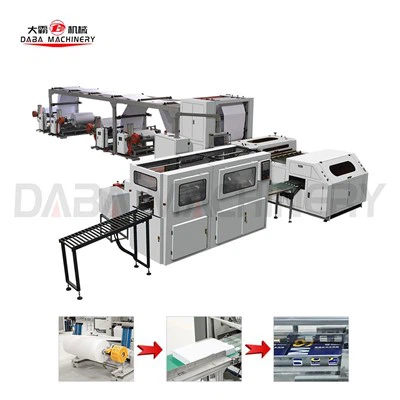
At the end of the day, adjusting tension on a bag making machine is just about being methodical, not guessing. Start with pre-checks, adjust the unwinder first, match tension through the line, test bags every time, and account for material, speed, roll size, and environment. If you’re still stuck, or you need help upgrading your machine’s tension system to make this easier, reach out to our team. We work with all kinds of bag manufacturers, from small shops with 1 line to big plants with 10, and we’ll help you get your tension right so you can cut down on waste and make better bags.
Handle Bag References:
- Industrial Bag Making Machines: Operation and Maintenance Manual, 2022
- Tension Control for Flexible Packaging Machinery, Society of Manufacturing Engineers, 2021
- Practical Guide to Non-Woven Bag Production, Textile Machinery Association, 2020
Wenzhou Daba Machinery Co., Ltd.
With abundant experience, we are one of the most professional bag making machine manufacturers and suppliers in China. We warmly welcome you to wholesale advanced bag making machine at competitive price from our factory. If you have any enquiry about cooperation, please feel free to email us.
Address: Qianbu Industrial Zone, Xincheng Street, Ruian City, Wenzhou, China.
E-mail: info1@dabamachinery.com
WebSite: https://www.dabaflexpack.com/
