Hey there! I’m a supplier of quartz slab sizes, and today I wanna chat about something that might seem a bit outta left – field at first: Do quartz slab sizes impact the acoustic properties of a space? Quartz Slab Sizes
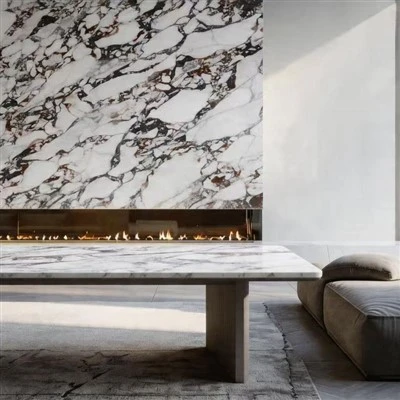
You know, when most people think about quartz slabs, they’re focused on the look. How it’ll make their kitchen countertops sparkle, or how it’ll add a touch of luxury to their bathroom vanities. But the way these slabs interact with sound in a room? That’s a whole different ballgame.
Let’s start with the basics of acoustics. In any given space, sound waves bounce around. Reflections, absorptions, and diffusions are the main things that happen to these sound waves. And the stuff in the room, like furniture, walls, and yep, quartz slabs, play a huge role.
Now, let’s dig into how size comes into play here. Quartz slabs come in all sorts of sizes. The smaller ones, say around 2 – 3 feet in width and 5 – 6 feet in length, tend to break up sound waves a bit more. When sound hits a smaller slab, it has more edges and corners to interact with. These edges can scatter the sound, kind of like a pinball machine. The sound waves hit these little barriers and go off in different directions. This can create a sort of diffusion effect. In a room with lots of small slabs, you might notice that the sound doesn’t just bounce straight back at you. It spreads out more, which can make the space feel more open – sounding.
On the flip side, large quartz slabs, like those 5 – 6 feet wide and 10 – 12 feet long, have a different effect. Since they have fewer edges relative to their surface area, sound waves tend to reflect off them more uniformly. It’s like a big mirror for sound. If you clap your hands or make a noise in a room with large slabs, the sound will bounce back in a more organized way. This can lead to a more defined echo, especially if the room is big enough.
Think about a kitchen. If you have small quartz slabs on the backsplash and countertops, it might mellow out the noise of dishes clinking and water running. The sound doesn’t bounce around in one big, loud chunk. Instead, it gets spread out, making the kitchen a more pleasant place to be. But if you go for large slabs, you might get a more polished, echoing sound. It could be cool if you’re going for a high – end, spacious feel, but it might also be a bit too much if the kitchen is small.
In a commercial setting, like a showroom, the choice of slab size can also affect how customers experience the space. Smaller slabs can create a more inviting, cozy atmosphere by breaking up the sound. Customers can chat with salespeople without feeling like their voices are bouncing off the walls. Large slabs, on the other hand, can give a sense of grandeur, but might need to be paired with proper sound – absorbing materials to avoid an overly echoey environment.
Another factor to consider is the installation pattern. If you install quartz slabs in a checker – board pattern with small sizes, it adds even more complexity to the sound reflections. The sound waves have to navigate through this uneven pattern, which can lead to some interesting acoustic effects. They might get absorbed or redirected in ways that are hard to predict. Larger slabs installed in a straightforward, single – pattern way are more predictable in terms of how they’ll interact with sound.
Now, I know what you’re thinking. "This is all well and good, but how does this affect my project?" Well, if you’re designing a space where sound quality is crucial, like a recording studio or a home theater, you need to think about the quartz slab sizes carefully. For a recording studio, you’d probably want to use smaller slabs or pair large ones with a lot of sound – absorbing panels. That way, the sound doesn’t get overly reflected and distorted.
If you’re just looking to spruce up your living room or a regular office space, the impact of slab size on acoustics might not be as critical. But it’s still something to keep in mind. You want the space to feel right, and that includes the way it sounds.
As a quartz slab sizes supplier, I’ve seen all sorts of projects. Some clients are more focused on the visual appeal, and that’s totally fine. But more and more, people are starting to ask about how the slabs will affect the acoustics of their space. I’m always happy to share my knowledge and help them make the best choice.
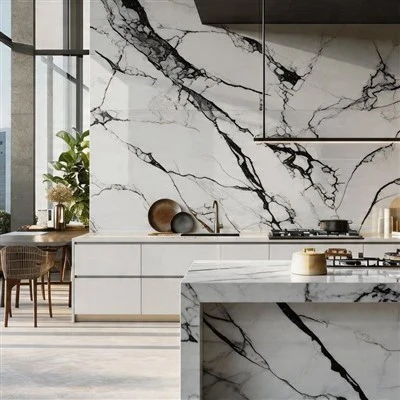
If you’re in the market for quartz slabs and want to learn more about how different sizes can work for your project, whether it’s about the look, the acoustics, or both, I’d love to chat. Drop me a line, and we can start a conversation about what kind of quartz slabs will be perfect for your space.
Quartz Countertop Edges References
- Olafsen, John H. "Acoustics: Sound Fields and Transducers." CRC Press, 2019.
- Barron, Michael. "Building Acoustics." Spon Press, 2020.
Wuhu Junde New Material Technology Co., Ltd.
As one of the most experienced quartz slab sizes manufacturers and suppliers in China since 1998, we warmly welcome you to wholesale top-quality quartz slab sizes made in China here from our factory. If you have any enquiry about cooperation, please feel free to email us.
Address: No.8 Yulin Road, Xinwu Economic Development Zone, Anhui Province, China
E-mail: 1127319898@qq.com
WebSite: https://www.jundequartz.com/
