As an outdoor fixed LED display supplier, I get this question all the time: can our products really hold their own at cultural festivals? For years, a lot of people pictured LED screens as nothing more than giant billboards for fast food or phone ads—way too flashy, too generic, to fit with festivals that are all about heritage, art, and community feeling. But I’ve watched that narrative shift over the last five years, working with everything from small town heritage fairs to major international cultural celebrations, and the short answer is a resounding yes. The real question isn’t whether it works—it’s how to use it in a way that honors the heart of cultural festivals, not just treats them as another space for ads. Outdoor Fixed LED Display
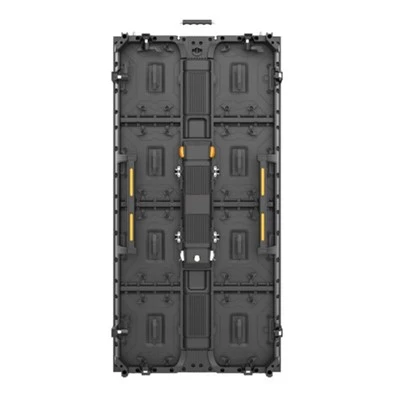
Let’s start with what outdoor fixed LED displays bring to the table that no other equipment can match. First is scalability. A traditional outdoor screen for events—like a projection or even a portable LED setup—has limits. Projections depend on perfect dark conditions; if there’s even a hint of twilight, the image washes out, and on a crowded festival site, you can’t hang a big enough screen for everyone to see. Portable LED panels need constant setup and teardown, which adds hours of labor and, more importantly, means you can’t leave them in place for long periods. Our fixed outdoor displays are built to stay outdoors, rain or shine, so you can mount them in a central spot and keep them running for days, even weeks, without downtime. For a cultural festival that runs over three or four days, or a small, annual heritage event that takes over a town square, that’s a game-changer.
Take the town of Santa Fe, New Mexico, for example. I worked with their annual International Folk Art Market two years back. The market spans the entire historic plaza, with 180 artisans selling textiles, pottery, and woodwork from 50 countries. Before we installed our fixed LED display, organizers struggled to share the artisans’ stories and process with the thousands of visitors who streamed through each day. A projection screen couldn’t reach the far corners of the plaza, and portable speakers distorted in the open air. We mounted two of our 10×15 foot fixed displays on the walls of the old municipal building, angled to cover the central walkway and the side tents. The displays showed live feeds of artisans at work—an Otomí weaver in Mexico dyeing thread, a Navajo silversmith shaping a turquoise pendant—alongside short interviews with the artists, and maps of where each craft originated. Visitors would pause at the displays, then follow the live feed to the artisan’s tent and ask questions. By the end of the weekend, 70% of the artisans told organizers they’d had more in-depth conversations with customers than the year before. That’s not just technology working—that’s a tool connecting people to the culture they came to celebrate.
Another big win is adaptability to different festival formats. Cultural festivals aren’t one-size-fits-all. Some are parades, where people are moving constantly, so you need content that’s dynamic enough to hold attention. Others are indoor-outdoor, like a Japanese matsuri, where traditional performances happen on a raised stage, and festival-goers sit on mats spread on the ground. Our fixed LED displays can be adjusted for brightness, contrast, and even color temperature to match any setting. For a rainy day during the Edinburgh Fringe Festival, we once adjusted our display’s brightness from 800 nits to 1200 nits to cut through the gray, overcast sky, so people huddled under umbrellas could still see live feeds of street performances. For a winter solstice festival in Sweden, we dialed down the blue light to 2700 Kelvin, matching the warm glow of fire pits and wooden buildings, so the display didn’t feel out of place next to the traditional bonfires and folk music.
But here’s the catch: too many festivals treat outdoor LED displays as just another way to show big, flashy visuals, and that’s where they go wrong. I’ve seen festivals blast fast-paced, neon music videos on our displays during a traditional Indian Holi celebration, and it felt jarring—like the technology was talking over the culture, not amplifying it. The best uses I’ve seen start with the festival’s core values, not the technology itself.
Last year, I worked with a small cultural festival in Ghana, the Homowo Festival in Accra. Homowo is all about giving thanks for the harvest, with drumming, storytelling, and masquerade processions. The festival’s organizer, a local cultural nonprofit, didn’t ask for a display to show ads for soft drinks. They wanted to preserve stories that older members of the community were forgetting—specifically, the oral histories of the Ga people, who founded Accra. We worked with local elders to record 15 short stories, each 3 to 5 minutes long, about the origin of Homowo, the meaning of different masquerade dances, and the role of farming in Ga life. We mounted two fixed displays on posts along the main procession route, at spots where the masquerades would slow down. When a masquerade group passed, the display would fade the story video to a live feed of the masquerade, so visitors could see the dance next to the story behind it. After the festival, a group of local schoolkids told us they’d never heard those stories before, and they’d used the display videos as a basis for a school project. That’s technology that preserves culture, not distracts from it.
Of course, there are challenges specific to outdoor fixed LED displays at cultural festivals, and I don’t sugarcoat that. First, there’s the weather. Our displays are rated IP65, meaning they’re dust-tight and can handle high-pressure water, so light rain or even a heavy downpour won’t damage them, but extreme heat or cold can affect performance. In a festival in Qatar last year, the temperature hit 110 degrees Fahrenheit, and we had to add extra cooling fans to keep the display from overheating. That’s a detail we don’t always have to worry about, but when it comes to cultural festivals in extreme climates, it’s something both the supplier and the organizer have to plan for. Then there’s power. Unlike portable generators for portable LED screens, fixed displays need a consistent power source. For the Santa Fe folk art market, we connected the displays to the town’s existing grid, which meant no noise from generators, so it didn’t disturb the artisans or the quiet of the historic plaza. But for a festival in a remote area, like a indigenous cultural gathering in the Amazon, we’ve worked with organizers to install solar panels connected to the display, so it runs off renewable energy without relying on local power lines.
Another challenge is accessibility. Cultural festivals have visitors of all ages and abilities, so the display has to be usable for everyone. I’ve learned that just putting a big screen up isn’t enough—you have to think about visual accessibility first. Our displays have high contrast ratios, so text and images are easy to read for people with low vision, and we can adjust the font size for any content. For a disability awareness festival in Toronto, we worked with organizers to add closed captioning and sign language overlay on the display, so Deaf visitors could follow live performances. We also make sure displays are mounted at a height that doesn’t block views for people in wheelchairs—no more than 8 feet off the ground, with an unobstructed path in front. That’s not just a nice extra; it’s part of using the display to be inclusive, which is a big part of what cultural festivals are about.
I also think it’s important to address a common misconception: that outdoor fixed LED displays are too expensive for small, community-run festivals. It’s true that buying and installing a fixed display has an upfront cost, but when you compare it to alternatives, it’s often more cost-effective in the long run. A 10×15 foot projection screen and a projector for a weekend festival might cost $5,000 to rent, but if that same festival runs for three years, renting adds up to $15,000, whereas a fixed display can be installed in a central spot and reused year after year for a fraction of that cost. For a small festival in a town square, the display can also be used for other community events the rest of the year—high school graduation ceremonies, local market promotions, even emergency alerts. That makes it an investment, not just a one-time festival expense.
I’ve also seen festivals use LED displays to go beyond just visual content. A few months ago, a music and folk festival in Norway asked us to integrate our display with their stage’s sound system. The display shows the rhythm and tempo of each song, so people who are hard of hearing can feel the music through visuals—flashes of light matching the beat, colors shifting with the melody. That’s a use case I never would have thought of early on, but it turns a festival from something only people who can see and hear fully can enjoy into something that’s accessible to everyone. It’s small, but it’s exactly the kind of innovation that makes outdoor LED displays work for cultural festivals, not against them.
At the end of the day, cultural festivals are about connection—between people and their heritage, between different communities, between past and present. Outdoor fixed LED displays don’t create that connection, but they can amplify it. They can turn a quiet story told by an elder into something a thousand visitors can see. They can show a traditional dance not just to people in the front row, but to everyone walking through the square. They can preserve a heritage that might otherwise be lost to time, by turning oral stories into visual content that’s easy to share and remember.
I’ve spent 12 years as an outdoor fixed LED display supplier, working with festivals around the world, and I’ve learned that the best partnerships aren’t about selling a screen. They’re about listening to what a festival actually needs. If a festival is looking to broadcast ads, a LED display isn’t the right fit. But if they’re looking to share stories, connect artisans with visitors, make cultural traditions accessible to a wider audience—then a outdoor fixed LED display is one of the most powerful tools they can use.

If you’re planning a cultural festival and you’re curious how an outdoor fixed LED display can work for your event, I’m here to help. We can walk through your site, talk about your needs, and figure out a solution that fits your budget and your goals. Let’s connect to discuss how technology can celebrate the culture that makes your festival special.
Indoor Fixed LED Display References:
- International Festivals and Events Association. (2022). Cultural Technology in Event Spaces: Best Practices for Accessibility and Relevance. IFEA Research Report.
- LED Display Industry Association. (2021). Outdoor Fixed LED Display Performance Guidelines for Cultural and Heritage Events. LDIA Technical Paper.
- Local Government Commission. (2023). Adaptive Outdoor Technology: Balancing Modern Equipment with Historic Site Preservation. LGC Community Infrastructure Report.
- World Health Organization. (2020). Accessible Technology for Public Events: Guidelines for Visual and Auditory Integration. WHO Publication on Inclusive Event Design.
- Folk Art Markets International. (2022). Preserving Artisan Stories Through Digital Engagement: Case Studies from Global Markets. FAMI Collaborative Report.
Shenzhen TrueColor LED Co., Ltd.
As one of the most professional outdoor fixed LED display manufacturers in China, we also support customized service. We warmly welcome you to wholesale durable outdoor fixed LED display for sale here from our factory. If you have any enquiry about cooperation, please feel free to email us.
Address: 3/F, Bldg A9, 10 Longyi Rd, Fuyong Sub-dist, Bao’an Dist, Shenzhen
E-mail: sales@truecolor-led.com
WebSite: https://www.truecolor-led.com/
