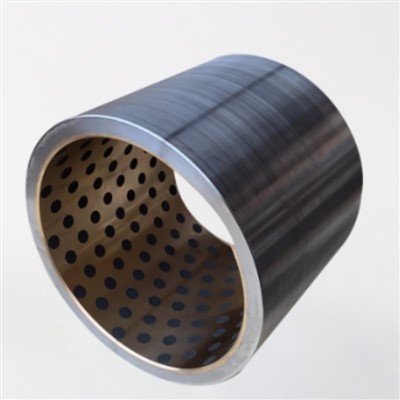
Rail Transit Castings If you’ve ever waited for a train that didn’t rattle so hard your coffee sloshes, or stepped onto a subway car that feels stable even as it rounds a tight curve, you’ve got rail transit castings to thank. I’ve spent 12 years as the owner of a mid-sized rail transit castings supplier, and let me tell you—there’s way more to these parts than just pouring metal into a mold. Every piece that goes into tracks, trains, or signaling systems has to pass a wild list of mechanical checks, and cutting corners on any of them can lead to really bad outcomes (we’re not just talking delayed commuters here). Let’s break down what actually makes a rail casting hold up, straight from the shop floor. First off, we’re not talking about random castings for bike parts or backyard grills. Rail castings are specific to a system that’s heavy—like, a full passenger train can weigh 200 tons or more—and in constant, brutal use. They deal with weather: freezing Minnesota winters, sweltering Texas summers, salt from Northeast tracks that eats away at metal faster than a kid with a lemonade stand on a hot day. And they take hits that most people never think about: not just the weight of the train itself, but the dynamic force of stopping suddenly, the twist of a curve, even the vibration of wheels rolling over tracks 24/7. That’s why the mechanical properties we test for aren’t just box-ticking exercises—they’re non-negotiable for keeping people safe and operations running. Let’s start with tensile strength, because this is the first thing we teach every new guy in the shop. Tensile strength is how much force a casting can take before it pulls apart, right? For rail parts, it’s not just about maxing out a number—you need a range that matches exactly what that part will see. A suspension bracket on a light rail car, for example, has to handle the full weight of the car plus the jolt of hitting a small track defect at 60 mph. We spec our carbon steel castings for that part to hit at least 550 MPa tensile strength—way higher than the cast iron you’d use for a backyard gate. But wait, it’s not just about being tough when you pull it. Yield strength is equally important. Yield strength is the point where the metal stops bouncing back and gets a permanent dent. If a casting yields in use, that’s a crack waiting to happen. For rail transit, we never want a part to even reach its yield point during normal operation. So we aim for a yield strength of at least 300 MPa for most structural castings, so even with unexpected load spikes, there’s no permanent deformation. I’ve seen a competitor cut corners here once—they used a lower-grade steel for a set of coupling castings, and within six months, a few of them had developed permanent bends. That led to a two-car train getting stuck in a Chicago tunnel, and the company had to pay out millions in delays and repairs. Never again—we test every single batch of yield strength before it leaves our shop. Next up is impact toughness, and this is the one that trips up a lot of new suppliers. Impact toughness is how well a metal can handle a sudden shock without cracking. Think about a train hitting a small debris on the track, or the sudden jolt when it slams on emergency brakes at 80 mph. For rail castings, we use the Charpy V-notch test for this—basically, we hit a notched sample of the casting metal with a swinging hammer and measure how much energy it absorbs before breaking. The minimum spec we work with is 27 Joules at room temperature, but here’s the catch: rail systems don’t just operate at room temp. In places like Canada or northern Europe, winter temps can drop below -40°C. Steel gets way more brittle when it’s cold, so we have to test impact toughness at those low temps too. A lot of guys will skip the low-temp test to save money, but we don’t—last year, we had a client test a competitor’s brake shoe casting in -30°C, and it shattered on the first hit. Total fail. Our castings hit 20 Joules even at -40°C, which is over the industry minimum, and that’s non-negotiable. Then there’s fatigue strength, and this is the hidden workhorse of rail castings. Fatigue is when a metal breaks after thousands (or millions) of repeated small loads, not one big hit. A train goes over a rail joint, say, every 10 feet. For a rail life of 30 years, that’s billions of cycles on a casting. That’s why fatigue strength is way more important than just max tensile strength for long-term use. Most people don’t realize that a casting can pass a tensile test with flying colors, but crack after a few years of repeated vibration and stress. We test fatigue by running a sample of the casting through millions of load cycles and measuring how much it can take before a micro-crack forms. For structural parts like bolster castings (the big parts that connect the train body to the wheels), we spec a fatigue strength of at least 150 MPa for 10 million cycles. I’ve seen castings that looked perfect on the outside crack because their fatigue strength was too low—usually because the metal had impurities that caused micro-cracks early on. That’s why we use a degassing process in our foundry to get rid of tiny air bubbles and sulfur inclusions, which are the main culprits for bad fatigue life. Another big one is hardness, and this ties directly to what the casting is actually doing. Hardness is how resistant a metal is to scratching, denting, or wear. For parts like rail wheels or brake pads, hardness has to be just right—too soft, and they wear out in months; too hard, and they can crack when they hit something. For our brake hanger castings, we aim for a hardness range of 180-220 HB (Brinell hardness) — soft enough to absorb vibration, hard enough to handle the friction of braking. For track cross ties, which take the load of the rail for decades, we go a bit higher, 210-250 HB. We test every casting for hardness with a portable hardness tester on the shop floor, so we don’t have to send samples out and wait days for results. It’s quick, it’s accurate, and it catches any bad casts before they leave. Wait, I can’t forget about ductility either—this is how much a casting can stretch or bend before breaking, and it goes hand in hand with impact toughness. A part that’s super strong but totally brittle is useless for rail—if it hits something, it’ll shatter instead of bending a little to absorb the shock. For rail castings, we spec at least 12% elongation (how much it stretches before breaking) for structural parts. That means if a casting is 100mm long, it can stretch 12mm before it breaks. That small bit of give is what keeps cracks from spreading during a sudden load. I remember a time when we had a batch of castings that missed the elongation spec by 2%—we scrapped the whole batch, even though they passed tensile and hardness. Elongation was off because we had a small issue with the cooling rate in the foundry, and that tiny lack of give would have been a disaster if one of those parts had taken a hit. But here’s the thing—all these mechanical properties don’t exist in a vacuum. A casting can nail tensile strength but fail fatigue, or have great impact toughness but bad hardness. That’s why we don’t just test one property and call it good—every single batch of our rail transit castings goes through a full suite of tests: tensile, yield, Charpy impact, hardness, elongation, and even magnetic particle testing to check for surface cracks that you can’t see with the naked eye. We also work closely with our clients—subway systems, light rail operators, even high-speed rail builders—to customize specs for their exact routes. If a line runs through mountainous terrain with lots of tight curves, we’ll bump up the fatigue strength for their wheel castings. If a line is in a super cold climate, we adjust the impact toughness test to match their winter temps. Last year, we worked with a client in Norway that needed castings for a new line that runs 200km north of the Arctic Circle. We had to adjust all our specs to account for temps as low as -50°C, and it took us three rounds of testing to get the impact toughness right. But that’s what being a rail casting supplier is about—you’re not just selling a part, you’re delivering a component that has to work in the harshest conditions on Earth. A lot of new suppliers in the rail space just cut corners: they use lower-grade metal, skip tests, run casts faster to save time. But rail transit isn’t a space for shortcuts. A casting that fails can derail a train, cause hundreds of injuries, and put an entire city’s transit system out of commission. That’s why we’ve built our reputation on hitting those mechanical specs, every single time. We stand behind every part we ship—if a casting fails for a reason we can control, we replace it for free, no questions asked. If you’re a transit engineer, a procurement manager, or anyone who’s sourcing rail castings that have to hold up to years of constant, heavy use, I get that you have specific needs. Every line is different, every part has unique demands, and you can’t afford to guess on mechanical properties. We don’t do guesswork here—we do real testing, real specs, and real parts that work when it matters most. If you’re ready to talk about your next project, need help customizing specs, or just have questions about what makes a rail casting reliable, hit us up. We’re here to make sure your transit system runs smooth, no matter what. You can reach out for a chat about your needs anytime.
References
ASM International. (2019). Rail Transit Castings: Mechanical Requirements and Testing. Materials Park, OH: ASM International.
European Committee for Standardization. (2021). EN 15551: Railway Applications – Castings for Rolling Stock. Brussels: CEN.
American Railway Engineering and Maintenance-of-Way Association. (2020). Manual for Railway Engineering, Volume 4: Structures and Materials. Lanham, MD: AREMA. Rail Transit Castings

Qingzhou Shengchen Machinery Technology Co., Ltd.
As one of the leading rail transit castings manufacturers and suppliers in China, we warmly welcome you to buy discount rail transit castings for sale here and get free sample from our factory. If you have any enquiry about customized service, please feel free to email us.
Address: Industrial Park, Mihe Town, Qingzhou City, Weifang, Shandong Province
E-mail: gjywb@qzsckj.cn
WebSite: https://www.sc-casting.com/
