Hey everyone, thanks for stopping by. I’m [Your Supplier Name], and for the last 8 years, I’ve been geeked out on mining waste heat utilization devices—those bad boys that turn all the excess heat from mine operations (think exhaust, process water, even rock that’s been hauled out hot) into something useful, like heat for offices, worker dorms, or even power for small equipment. A question I get literally every week from mine ops managers is: “What do we actually need to install one of these?” It’s not just ordering a unit and plugging it in, trust me. Skipping the right steps here means you’re wasting money, blowing efficiency, or even triggering mine safety rules we all have to follow. Let’s break this down like I’m chatting with a buddy who runs a site, no stuffy jargon, just real, actionable stuff. Mining Waste Heat Utilization Device
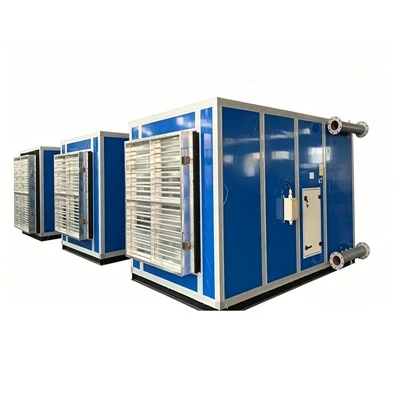
First off, before you even pick up the phone to order a device, you need to nail down the exact heat source you’re working with. Mines have all kinds of waste heat, and generic units won’t cut it. Let’s start with temperature, because that’s non-negotiable. If you’ve got hot exhaust from a diesel haul truck or a blasting fume stack? That’s usually 250°C to 500°C—perfect for high-temperature heat exchangers. But if it’s process water from ore processing that’s only 60°C to 90°C? You need a device designed for low-grade waste heat, not the heavy-duty exhaust ones. I’ve seen a mine skip this and order a high-temp unit for their low-temp water—total waste, could’ve been half the cost if they checked first. Then there’s volume: how much of that heat are you dumping every hour? A small gold mine might dump 10,000 liters of hot water per hour, while a big copper mine could hit 100,000 liters. If you size your device for half that volume, it’ll overload in peak production (like when you’re running 24/7 to meet a shipment deadline) and break down fast. Also, check for contaminants in the heat source—mines have this stuff all the time. Process water has heavy metals, ore dust, and even mild acids. Exhaust has soot and unburnt fuel. If your device doesn’t have pre-filters or corrosion-resistant components, that junk will clog the coils or eat away at the metal in 6 months instead of 5 years. I learned this the hard way with a nickel mine that used a standard steel exchanger instead of a stainless steel coated one—had to replace it 4 times in a year before we switched gear.
Next big one: site physical space and layout. You can’t just plop this thing anywhere on the mine, even if it’s empty. First, access for installation and maintenance. These units are big—we’re talking 10 feet wide, 15 feet tall, for mid-sized units. You need to make sure there’s a clear path from the delivery gate to the spot where it’s going, no fallen rock, no heavy equipment blocking the way. Also, you need space around it for techs to wrench on it monthly—like a 3-foot clearance on all sides, plus a little extra for the pipes that hook it up to the heat source and the end use (like the dorm heating loop). Then there’s elevation and foundation. Mines are on hillsides, right? You can’t set a 10,000-pound unit on dirt that shifts when it rains or when you blast nearby. We always tell clients to pour a reinforced concrete pad that’s level, no more than 0.5-degree slope—any steeper and the pumps inside won’t work right. Also, proximity to the heat source and end use is key. If your exhaust stack is 500 feet from the main office dorms, running pipes that far means you’re losing 10-15% of the heat along the way to ambient air. I had a client that wanted to put their unit next to a random empty lot on the opposite side of the site, and we talked them into moving it 100 feet closer to both the exhaust stack and the admin building—they saved 12% on their energy bills the first quarter, no joke.
Then there’s safety and regulatory stuff—mines have way more rules than a regular commercial building, so skip this and you’ll get shut down faster than a haul truck with a flat tire. First, mine-specific safety codes: most countries (US MSHA, Canada’s CCOHS, Australia’s MHSA) require any equipment near high-heat sources or combustible materials (mine timber, fuel tanks) to have fire suppression and temperature monitoring sensors. Our devices come pre-wired with these, but you have to make sure your mine’s electrical system is rated for the site’s classification—if you’re in a gassy mine (gassy means methane, super dangerous), you need explosion-proof wiring, not regular industrial wiring. I’ve seen a small coal mine almost get a $50k fine because they used standard wiring for a gassy zone unit—they had to redo it before we could turn it on. Also, environmental compliance: mining waste heat is supposed to be “recovered,” not just moved, right? So you need to make sure the device doesn’t release any harmful stuff into the air or water. All our units meet EPA (or equivalent) standards for emissions from heat transfer, but you have to get a pre-installation check with your mine’s environmental team to confirm your heat source isn’t already violating any discharge limits—wait, no, the device captures waste, so it helps, but some sites have to report heat recovery, so we work with them on paperwork to make that easy. Oh, and ventilation near the unit: if you’re using exhaust heat, you can’t trap fumes around the device—need exhaust vents to vent any leftover fumes, same with if you’re dealing with hot water that might have mild vapors.
Don’t sleep on the utility tie-ins and existing infrastructure. This is the stuff that trips people up. First, power supply for the device: it’s not a huge draw, like a big air conditioner, but mines often have power that’s variable—like when the grid or on-site generator fluctuates. Our devices have variable frequency drives (VFDs) that adjust, but you need to confirm your panel has enough spare amps. I had a client that thought their panel had extra capacity, but it was already maxed out for the crusher and haul truck chargers—we had to add a sub-panel before installing the heat unit, which added a week but avoided a shutdown. Then the loop to the end use: if you’re heating worker dorms or office space, you need to tie into the existing heating system. If that system is old and has rusty pipes, you’ll clog your new heat exchanger—so we usually recommend a flush of the existing loop before connecting. If you’re using the heat for a process, like drying ore concentrate, you need to make sure the process is flexible enough to take the steady heat output—some mines run their ore process in batches, so we tweak the device’s control system to match that, not just run it 24/7. Also, water supply: if your device uses water as a working fluid, you need to have a reliable supply of water that’s free of too much mineral buildup—hard water will scale the coils over time. If your mine only has hard groundwater, we add a water treatment skid as part of the install, which we factor into the total cost, but you can skip that only if you already have treatment at the site.
Last, but definitely not least: site-specific customization and long-term support. No two mines are the same, so a one-size-fits-all unit never works. For example, a remote mine in the Yukon that needs heat in -40°F temps needs the device’s piping to have extra insulation and a freeze protection loop—our standard units don’t have that, but we add it for cold climates. A mine in a desert in South Africa deals with high ambient temps, so we tweak the cooling system of the device so it doesn’t overheat. Also, you need to plan for installation timeline: mines run on tight schedules, so our install teams coordinate with your ops team to do the work during planned shutdowns, not when you’re in the middle of a production push. And post-install, you need a maintenance plan—we offer remote monitoring (so we can catch a clog or a pump issue before it breaks) and on-site tech visits every 6 months, but you have to have space for our techs to come in, plus keep the site accessible. I can’t tell you how many times we’ve had clients forget that maintenance is required, then the unit stops working and they’re out thousands in lost production.
Wait, let me make this real with an example to drive it home. Last year, I worked with a zinc mine in Montana that was dumping 85,000 liters of 75°C process water per hour, plus 30,000 liters of 180°C exhaust from their smelter. They tried a competitor’s generic unit first—size was wrong, so it could only handle 50,000 liters of water, so it was half-empty half the time, and their techs tried to skip the water treatment because they thought it was a scam. Within 4 months, the coils were scaled shut, and the unit was only capturing 40% of the heat, not the 80% they promised. We worked with them: we sized a dual-loop unit for both their heat sources (so it handled low-temp water and high-temp exhaust), added a scale inhibitor skid and stainless steel coils, moved the unit 120 feet closer to both the smelter and their worker dorms, and tweaked the control system to match their 3-shift production schedule. Now they’re capturing 82% of their waste heat, cutting their dorm heating bill by $120k a year, and they haven’t had a maintenance issue in 10 months. That’s the difference between checking the requirements and cutting corners.

If you’re a mine ops manager, maintenance lead, or whoever’s in charge of energy costs, don’t guess on this stuff. We’ve installed over 200 of these units in every type of mine, from small gold pits to big copper open-pit mines, so we know exactly what your site needs. Skip the generic Google advice—reach out to us to walk through your specific heat sources, site space, and rules, and we’ll give you a free, no-obligation breakdown of what you need, no sales pressure, just real info that’ll save you money and headaches.
Mine Air Heaters References
- Mine Safety and Health Administration (MSHA). (2022). Electrical Standards for Mining Equipment and Installations. U.S. Department of Labor.
- International Energy Agency (IEA). (2021). Waste Heat Recovery in Mining: Technical Potential and Deployment Roadmap. IEA Publishing.
- Canadian Centre for Occupational Health and Safety (CCOHS). (2020). Safety Guidelines for High-Temperature Process Equipment in Underground and Surface Mines. CCOHS.
- National Renewable Energy Laboratory (NREL). (2019). Low-Grade Waste Heat Utilization for Industrial Applications: Best Practices for Mining Sites. NREL/TP-5400-74562.
- Australian Mining and Petroleum Safety Authority (MPSA). (2021). Environmental Compliance for Mining Waste Heat Recovery Systems. MPSA.
Wuxi Hongye Automation Engineering Co., Ltd.
As one of the most professional mining waste heat utilization device manufacturers and suppliers in China, we’re featured by high quality customized products. Welcome to wholesale advanced mining waste heat utilization device in stock here and get quotation from our factory. Good service and punctual delivery are available.
Address: No.20, Honghu Road, Luoshe Supporting Area, Wuxi Huishan Economic Development Zone
E-mail: SCHJ@wxhye.com.cn
WebSite: https://www.wuxihongye.com/
