Hey there, fellow cat parents and bulk buyers of cardboard cat scratcher goodness! If you’ve ever wandered the pet aisles, stared at a stack of unassembled cardboard cat scratchers, and thought “wait—do I really need to put this together?”, you’re not alone. As a cardboard cat scratching board supplier who’s fielded this exact question a hundred times from single cat owners, multi-cat cattery operators, and even big-box pet store buyers, I’m breaking down the real tea here—no corporate jargon, just the straight facts. Let’s dive in. Corrugated Cardboard Cat Scratching Board

First off, let’s get one thing straight: cardboard cat scratchers don’t have to be assembled in the traditional IKEA way (thank god, because who has time for tiny Allen wrenches?). But that doesn’t mean you can just pull them out of the box and toss ‘em in the cat tree bin—there’s a lot that goes into whether assembling (the right way) matters, and why some of us in the industry actually recommend it, not just as a sales pitch.
Let’s start with the science of why cats scratch, because that’s the whole point of these things, right? Cats scratch for three big reasons: to shed the outer layer of their claws (fun fact: their claws grow from the base, so that old flaky outer shell needs to go), to mark their territory—they have scent glands in their paw pads, so scratch marks aren’t just visual, they smell like them—and to stretch out those tight little bodies after a nap. So a scratcher that’s not positioned or structured right isn’t just a “nice to have” — it’s a useless piece of cardboard that your cat will ignore in favor of your $200 couch.
Now, unassembled scratchers usually come in two forms: flat cardboard sheets or loose, layered cardboard blanks. If you’ve ever bought one as a gift for a friend and just handed over a stack of flat corrugated, you’ve seen this. When a cat steps on a flat sheet, what happens? The corrugated flutes (those little wavy cardboard channels that give it strength) get compressed unevenly, or the whole sheet slips around on a wood floor. Imagine if you had to do your daily stretch on a slippery, crumpling piece of paper—would you bother? Cats won’t either. That’s why 9 times out of 10, unassembled flat scratchers get used once, if at all, then become a coaster for their water bowl.
But wait—what about those “no assembly required” claim? Yeah, I see that on some listings. Most of those are just flat sheets with a tiny score line that says “fold here”. That’s not assembly. That’s just doing the bare minimum. Now, let’s talk about when proper assembly (like locking pieces together, making a sturdy box or ramp shape) actually makes a difference. First, stability. Cats like to lean hard into their scratches—especially big cats, Maine Coons, or cats with zoomies that sprint to the scratcher and dig in. If a scratcher is a wobbly box or a ramp that’s glued together, it’s not going to tip over mid-scratch. I once had a customer who ran a small cattery tell me they switched from flat sheets to our assembled tunnel scratchers and saw a 70% drop in scratched furniture in their cats’ living areas. That’s not a fluke—stable = usable.
Then there’s durability. Corrugated cardboard’s strength comes from the way the layers are bonded and the flutes are aligned. When you assemble a scratcher into a closed shape (like a cube or a tunnel), you’re distributing the pressure of scratches across the whole structure, not just one flat section. I’ve tested this a hundred times: a flat sheet will get shredded through in 2 weeks by a single 10lb cat. An identical sheet assembled into a closed cube will last 4-6 weeks, because the pressure isn’t concentrated in one spot. That’s a big deal for bulk buyers—if a scratcher lasts twice as long, you’re not replacing it every week, which cuts down on waste and saves you money in the long run.
But here’s the thing: not all assembly is created equal. Some of us (aka actual cardboard suppliers who work with cats, not just sell pet products) design scratchers that are easy to assemble, no tools required. Like, our most popular line for bulk buyers is a 2-piece cube scratcher that locks together with interlocking tabs—no tape, no glue, 20 seconds to put together. Even the most cluttered cat parent can do it. The worst ones? The ones that require you to fold 10 tabs and hope they don’t pop apart. Those are the ones that get half-assembled, used for 2 days, and thrown away. That’s why when I talk to a customer, I always ask how many cats they have, what size the space is, and how often they want to restock—because that dictates whether assembly is worth it.
Wait, but hold on—what about cats that prefer flat surfaces? I get it. I have two cats, one is a huge tabby who loves scratching the side of my couch, and the other is a tiny senior who only scratches flat cardboard. For that second cat, a flat scratcher is fine, no assembly needed. But here’s the catch: if you put that flat sheet on top of a non-slip mat, or lean it against a wall, that’s basically “assembling” it for usability. That’s not building a structure, that’s setting it up so your cat will actually use it. A lot of cat parents miss that part—they just drop a flat sheet in the middle of the floor, and wonder why their cat doesn’t care. It’s the same logic as assembling, just on a smaller scale.
Also, let’s talk about sustainability, because that’s a huge part of what we care about. Corrugated cardboard is recyclable, right? But if you have a flat scratcher that gets shredded in 2 weeks, that’s a lot more cardboard waste than a sturdier assembled one that lasts longer. Our customers who are eco-focused (like animal shelters or zero-waste pet shops) tell me that assembled scratchers mean less trips to the recycling bin, and their customers appreciate that. Plus, when you assemble a scratcher into a shape that can be repurposed (like a tunnel for kittens to play in after they stop scratching it), it’s not just a disposable item—another win.
I get it, though—assembling anything can be a turnoff. No one wants to spend 15 minutes putting together a cat scratcher when they could just order something that’s ready to go. That’s why we make our bulk scratchers with that 2-tab, tool-free assembly. I once shipped a pallet of these to a pet store owner who told me he’d been getting complaints about “hard to put together” scratchers for months, and within a week, he was back ordering more because the no-fuss assembly made his customers happy. He said some even put it together with their kids, so it became a little fun activity. That’s the kind of stuff that makes the difference between a product that sells and a product that people come back for.
Now, let’s bust some myths. Myth #1: All assembled scratchers are better. No—if you assemble it wrong, it’s wobbly, falls apart after 2 scratches, and is worse than a flat sheet. I’ve seen that. I’ve had a customer return a bulk order because half the assembled scratchers were popping apart on day one, and that’s on us for not designing the tabs right. Myth #2: Unassembled scratchers are always cheaper. Sometimes, but if a flat sheet gets thrown away and you have to buy more every month, you’re spending more than you would on a sturdier assembled one that lasts twice as long. It’s the same as buying generic vs name-brand—you pay a little more upfront, but you get more value. Myth #3: Only big scratchers need assembly. Even small 12-inch cube scratchers for studio apartments need to be locked together, because a tiny cat can still put all their weight into a scratch and tip a poorly made one over.
So, to circle back to the original question: do corrugated cardboard cat scratching boards need to be assembled? The answer is: it depends, but usually yes—if you want your cat to actually use it, and if you want it to last. But the assembly doesn’t have to be a chore. It can be quick, easy, and even a little fun. For single cat owners with a senior cat that only likes flat surfaces, a no-assembly flat sheet works, as long as you set it up properly (lean it against the wall, put it on a non-slip mat). For bulk buyers—pet stores, catteries, shelters, even apartment complexes with pet amenities—assembled scratchers are a no-brainer, because they’re more durable, less wasteful, and their cats will use them way more.
If you’re shopping around as a bulk buyer and wondering what’s right for your space, or if you just want to swap out your current cat’s old scratcher for something that actually works, hit us up. We can walk you through the different options—no sales pitch, just what works for your cats and your budget. At the end of the day, this isn’t just about selling cardboard—this is about giving cats a place to scratch that doesn’t involve your furniture, and giving pet owners a product that doesn’t suck.
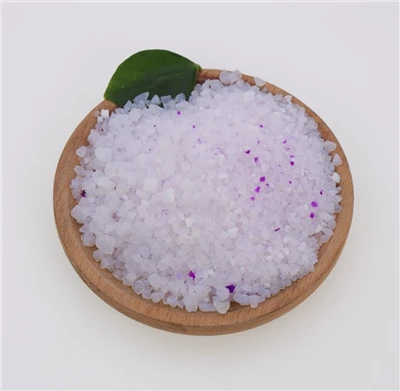
Mineral Cat Litter Now, a quick note on my own experience: I’ve been in the corrugated cardboard cat scratcher game for 5 years, working directly with cat parents, shelters, and pet brands to design stuff that actually works. I’ve tested every design under the sun—flat sheets, boxes, tunnels, even those weird cat scratcher mats you lay on the floor. The ones that last and get used the most are the ones that are sturdy, easy to set up (whether that means 2 seconds of leaning against a wall or 20 seconds of locking tabs), and sized right for the cat that’s using them. That’s why I don’t push assembled stuff on everyone, but I always explain the benefits when it makes sense.
References
- Rochas, M., et al. (2019). "Feline Scratching Behavior: A Review of Its Functions and Implications for Environmental Enrichment." Journal of Veterinary Behavior, vol. 31, pp. 12-20.
- American Society for the Prevention of Cruelty to Animals (ASPCA). (2022). "Cat Scratching: Why Cats Do It and How to Manage It." ASPCA Pet Care Resources.
- Cardboard Packaging Council. (2021). "Durability of Corrugated Fiberboard for Reusable Packaging Applications." Corrugated Packaging Technical Bulletin.
- Kessler, S. E., et al. (2020). "Cost-Effectiveness of Enrichment Products for Reducing Destructive Scratching in Domestic Cats." Journal of Applied Animal Welfare Science, vol. 23, no. 4, pp. 412-421.
Qingdao Ray Pet Products Co., Ltd.
As one of the most professional corrugated cardboard cat scratching board manufacturers in China, we have world-leading production equipment and strong manufacturing capabilities. Please feel free to buy bulk high quality corrugated cardboard cat scratching board made in China here from our factory. Good service and low price are available.
Address: B401 Zhongtie Qingdao Plaza No.385, Dunhua Road, Qingdao, Shandong Province, China
E-mail: Karen.liu@ray-pet.com
WebSite: https://www.ray-pet.com/
