What is the chemical resistance of Resin Frankfurt Abrasive?
As a supplier of Resin Frankfurt Abrasive, I’ve witnessed firsthand the growing importance of understanding the product’s chemical resistance. This characteristic isn’t just a technical detail; it’s a critical factor that impacts the performance, durability, and suitability of the abrasive in various industrial applications. Resin Frankfurt Abrasive
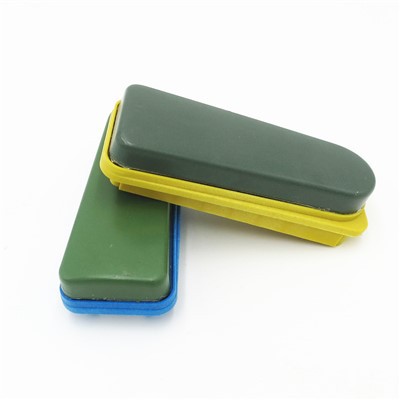
Chemical resistance refers to a material’s ability to withstand the action of chemicals without undergoing significant degradation or loss of its properties. In the case of Resin Frankfurt Abrasive, this means it can resist the corrosive effects of acids, alkalis, solvents, and other aggressive chemical substances commonly encountered in industrial settings.
Let’s start by exploring the composition of Resin Frankfurt Abrasive. This abrasive is typically made up of a resin – bonded system. The resin acts as a binder that holds the abrasive grains together, forming a solid and uniform structure. The type of resin used is carefully selected to contribute to the chemical resistance of the final product. Commonly, phenolic resins are utilized in Resin Frankfurt Abrasive due to their excellent chemical stability. Phenolic resins have a high cross – linked structure, which provides a barrier against chemical attack. They can resist a wide range of pH conditions, from weakly acidic to moderately alkaline environments.
The abrasive grains themselves also play a role in the overall chemical resistance. Abrasive grains such as aluminum oxide and silicon carbide are commonly used in Resin Frankfurt Abrasive. Aluminum oxide is known for its good chemical stability in many environments. It can withstand the action of most weak acids and alkalis without significant deterioration. Silicon carbide, on the other hand, has even better resistance to oxidation and corrosion in some harsh chemical conditions, especially at high temperatures.
In different industrial applications, the chemical resistance of Resin Frankfurt Abrasive is put to the test. Take the metalworking industry as an example. In metal grinding and polishing processes, various cutting fluids and coolants are often used. These fluids can contain acids, alkalis, or other chemical additives to enhance the machining performance. Resin Frankfurt Abrasive with high chemical resistance can resist the chemical attack from these fluids. This ensures that the abrasive retains its shape, structure, and cutting ability during the machining process. As a result, it provides consistent grinding and polishing quality, reducing the frequency of abrasive replacement and improving the overall production efficiency.
In the automotive manufacturing process, engine parts need to be finely ground and polished. These parts are often exposed to engine oils, hydraulic fluids, and other chemicals. Resin Frankfurt Abrasive with excellent chemical resistance can be used to produce high – precision abrasion products for these applications. The abrasive’s ability to withstand the chemical action of these fluids means that it can maintain its abrasive performance over a long period, ensuring the dimensional accuracy and surface quality of the engine parts.
In the aerospace industry, the components are often subjected to strict performance requirements. Resin Frankfurt Abrasive is used in the manufacturing of turbine blades, aircraft frames, and other critical parts. These parts may be exposed to aviation fuels, hydraulic fluids, and various chemicals during operation. The chemical resistance of the abrasive ensures that it can grind and polish these parts without being affected by the surrounding chemical environment. This is crucial for maintaining the structural integrity and performance of the aerospace components.
The testing of the chemical resistance of Resin Frankfurt Abrasive is a rigorous process. One common method is the immersion test. Samples of the abrasive are immersed in different chemical solutions with varying concentrations, pH values, and exposure times. The weight change, hardness change, and structural integrity of the samples are then measured and analyzed before and after the immersion. Another method is the salt spray test, which is often used to simulate the corrosion conditions in marine or humid environments. The abrasive samples are exposed to a salt – rich mist for a certain period, and the corrosion resistance is evaluated based on the appearance and performance of the samples.
When it comes to improving the chemical resistance of Resin Frankfurt Abrasive, manufacturers often use several strategies. One approach is to enhance the resin formulation. By adding specific additives or modifying the cross – linking process, the resin can be made more resistant to chemical attack. For example, adding corrosion inhibitors to the resin can form a protective layer on the surface of the abrasive, preventing the penetration of chemicals.
Another strategy is to optimize the surface treatment of the abrasive grains. Coating the grains with a thin layer of chemically resistant material can improve their resistance to chemicals. This not only protects the grains from corrosion but also enhances the bond between the grains and the resin.
In addition to the above – mentioned industrial applications, Resin Frankfurt Abrasive with good chemical resistance also has potential in the electronics industry. In the manufacturing of electronic components such as printed circuit boards (PCBs), precision grinding and polishing are required. The abrasive needs to be able to resist the chemical solutions used in the PCB manufacturing process, such as etching solutions and plating baths. Resin Frankfurt Abrasive’s chemical resistance makes it a reliable choice for these applications, ensuring the high – quality production of electronic components.
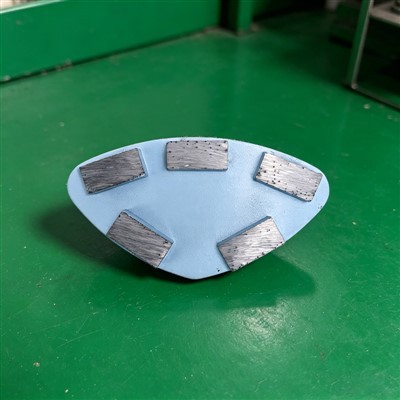
As a supplier of Resin Frankfurt Abrasive, I understand that customers have different requirements for chemical resistance depending on their specific applications. That’s why we offer a wide range of products with varying degrees of chemical resistance. Our technical team is always ready to provide professional advice and solutions to help customers select the most suitable abrasive for their needs.
Diamond Fickert Abrasive If you are in an industry that requires high – performance abrasives with excellent chemical resistance, we invite you to contact us for a detailed discussion. Whether you need abrasives for metalworking, automotive, aerospace, electronics, or other applications, we can offer you the right Resin Frankfurt Abrasive products. Our commitment to quality and customer satisfaction ensures that you will get the best value for your investment. Let’s start a conversation about how our Resin Frankfurt Abrasive can meet your specific chemical – resistance requirements and enhance your production processes.
References
- "Handbook of Abrasive Technology", John Wiley & Sons
- "Industrial Abrasives: Properties and Applications", CRC Press
- Research papers on resin – bonded abrasives from international journals such as "Journal of Materials Science" and "Journal of Manufacturing Science and Engineering"
Quanzhou Cheefung New Materials Co., Ltd.
As one of the most experienced resin frankfurt abrasive enterprises in China, we are able to meet the needs of the majority of our customers. Please feel free to wholesale advanced resin frankfurt abrasive made in China here from our factory. For price consultation, contact us.
Address: Jinshan Community, Licheng District, Quanzhou City, Fujian, China
E-mail: info@prostonetools.com
WebSite: https://www.prostonetools.com/
