When setting up a nanotechnology lab, it is crucial to have the right reagents and their corresponding supporting supplies. As a supplier of Reagents and Supporting Supplies, I understand the specific needs and challenges that come with nanotechnology research. In this blog, I will discuss the essential supporting supplies required for a nanotechnology lab’s reagents and how they contribute to the success of research projects. Reagents and Supporting Supplies

1. Storage and Handling Supplies
Refrigeration and Freezing Units
Reagents used in nanotechnology research often require specific temperature conditions for storage. Many biological and chemical reagents are sensitive to temperature changes and can degrade if not stored properly. For example, enzymes and proteins used in nanoparticle synthesis and modification need to be stored at low temperatures, typically between -20°C to -80°C. Ultra – low temperature freezers are essential for long – term storage of these heat – sensitive reagents.
Refrigerators maintained at 2 – 8°C are used for storing other reagents such as buffers, antibodies, and some nanoparticle solutions. These units must have accurate temperature control systems to ensure the stability and efficacy of the reagents. Additionally, they should be equipped with alarms to alert lab personnel in case of temperature fluctuations.
Storage Containers
The choice of storage containers is also critical. Glass vials are commonly used for storing liquid reagents due to their chemical resistance and inertness. They can be sealed tightly to prevent evaporation and contamination. For long – term storage, amber glass vials are preferred for light – sensitive reagents as they block out harmful UV light.
Plastic tubes are another option, especially for smaller volumes and when the reagent is not reactive with the plastic. Polypropylene tubes are widely used because they are inexpensive, lightweight, and can withstand a range of temperatures. However, some reagents may interact with certain types of plastics, so it is important to choose the appropriate material.
Labeling supplies are an often – overlooked but essential part of storage. Clear and accurate labels with information such as reagent name, concentration, date of preparation, and expiration date help prevent mix – ups and ensure the proper use of reagents.
2. Measuring and Dispensing Supplies
Pipettes
Pipettes are used to measure and dispense small volumes of reagents accurately. In nanotechnology, where precise control of chemical reactions is crucial, pipettes with high accuracy and precision are required. Single – channel pipettes can dispense volumes ranging from a few microliters to several milliliters. They are available in both manual and electronic versions.
Multichannel pipettes are useful for handling multiple samples simultaneously, which is common in high – throughput nanotechnology experiments such as screening for new nanoparticles or evaluating their properties. These pipettes can handle up to 12 or 24 channels, increasing the efficiency of liquid handling.
Regular calibration of pipettes is necessary to maintain their accuracy. Calibration kits and services are available to ensure that the pipettes dispense the correct volume within the specified tolerance.
Balances
For weighing solid reagents, high – precision balances are essential. In nanotechnology, very small amounts of substances are often used, and balances with a readability of micrograms or even nanograms are required. Analytical balances are commonly used in nanotech labs. They are enclosed in a draft – shield to prevent air currents from affecting the measurement.
Microbalances are even more sensitive and are used when extremely small quantities need to be weighed. These balances require a stable environment with minimal vibrations and temperature fluctuations to provide accurate results.
3. Safety Supplies
Personal Protective Equipment (PPE)
Working with nanotechnology reagents involves handling potentially hazardous chemicals. Therefore, appropriate PPE is necessary to protect lab personnel. Lab coats made of chemical – resistant materials should be worn at all times to prevent skin contact with reagents.
Gloves are another important part of PPE. Nitrile gloves are commonly used because they offer good chemical resistance against a wide range of organic and inorganic chemicals. In some cases, where extra protection is needed, such as when handling highly toxic reagents, double – gloving may be required.
Safety glasses or goggles protect the eyes from splashes and aerosols. Face shields can be used in addition to goggles for more comprehensive face protection, especially when handling corrosive or volatile reagents.
Fume Hoods
Fume hoods are essential for protecting lab personnel from inhaling toxic fumes and vapors. When working with reagents that release harmful gases, such as some solvents used in nanoparticle synthesis, the work should be carried out in a fume hood. The fume hood should have a proper airflow system to ensure that the fumes are effectively removed from the workspace.
Regular maintenance and inspection of fume hoods are necessary to ensure their proper functioning. Filters need to be replaced regularly, and the airflow should be monitored to ensure that it meets the required standards.
4. Reaction and Sample Preparation Supplies
Reaction Vessels
The choice of reaction vessels depends on the type of reaction and the nature of the reagents. Glass beakers, test tubes, and flasks are commonly used for general chemical reactions in nanotechnology. Borosilicate glass is preferred because of its high thermal resistance and low coefficient of expansion, which makes it suitable for reactions involving heating and cooling.
For more specialized reactions, such as those carried out under high pressure or temperature, stainless – steel reactors or pressure vessels may be required. These vessels are designed to withstand extreme conditions and ensure the safety of the reaction.
Mixing and Stirring Devices
Proper mixing of reagents is crucial for successful nanotechnology experiments. Magnetic stirrers are widely used because they are simple, reliable, and can provide uniform mixing. A stir bar is placed inside the reaction vessel, and a magnetic field rotates the stir bar, causing the reagents to mix.
For more complex mixing requirements, such as when dealing with viscous solutions or when a higher level of shear is needed, overhead stirrers can be used. These stirrers use a motor – driven shaft and impeller to mix the reagents.
5. Analytical and Characterization Supplies
Centrifuges
Centrifuges are used to separate components of a mixture based on their density. In nanotechnology, centrifugation is often used to separate nanoparticles from the reaction solution or to purify them. Microcentrifuges are used for small – volume samples, while floor – standing centrifuges can handle larger volumes.
The choice of centrifuge depends on the required speed and the type of rotor. Different rotors can be used for different applications, such as fixed – angle rotors for pelleting and swinging – bucket rotors for separating samples based on density gradients.
Spectroscopy Supplies
Spectroscopy is an important tool in nanotechnology for characterizing nanoparticles. For example, UV – Vis spectrometers are used to measure the absorption spectra of nanoparticles, which can provide information about their size, shape, and composition. Cuvettes, which are small, rectangular containers made of glass or quartz, are used to hold the samples in the spectrometer.
Fluorescence spectrometers are used for detecting the fluorescence emission of nanoparticles. Specialized cuvettes with high optical quality are required for fluorescence measurements to minimize background interference.
Conclusion
In conclusion, a nanotechnology lab requires a wide range of supporting supplies for its reagents to ensure the success of research projects. From storage and handling to safety, reaction, and analysis, each aspect of the lab operation depends on the proper selection and use of these supplies.
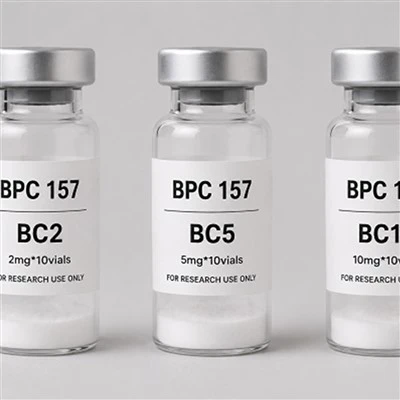
Lose Weight Peptides As a supplier of Reagents and Supporting Supplies, I am committed to providing high – quality products that meet the specific needs of nanotechnology researchers. If you are setting up a nanotechnology lab or looking to upgrade your existing supply, I invite you to get in touch with us for a discussion on your procurement needs. Our team of experts can help you choose the right products and provide you with the best solutions for your research.
References
- Murphy, C. J., Gole, A. M., Hunyadi, S. E., Stone, J. W., Sisco, P. N., Alkilany, A. M., … & Goldsmith, E. C. (2008). Anisotropic metal nanoparticles: Synthesis, assembly, and optical applications. Journal of physical chemistry C, 112(19), 6874 – 6882.
- Xia, Y., Xiong, Y., Lim, B., & Skrabalak, S. E. (2009). Shape – controlled synthesis of metal nanocrystals: Simple chemistry meets complex physics? Angewandte Chemie International Edition, 48(1), 60 – 103.
- Korgel, B. A., Fitzmorris, J. T., & Bae, W. K. (2010). Nanocrystal synthesis in the laboratory: A review of comprehension, control, and computer – assisted design. Accounts of chemical research, 43(10), 1289 – 1297.
Ruypeptide Biotechnology Co., Ltd.
Ruypeptide Biotechnology Co., Ltd. is one of the most professional reagents and supporting supplies manufacturers and suppliers in China. With abundant experience, we warmly welcome you to buy discount reagents and supporting supplies in stock here and get pricelist from our factory. Quality products and reasonable price are available.
Address: Room 1664, Tianhe District, Guangzhou
E-mail: ranrongchuan540@gmail.com
WebSite: https://www.gslifepharma.com/
