What is the quality standard of steel pipes? Well, as a steel pipe supplier, I’ve dealt with this question a lot. Let’s break it down and see what really makes a high – quality steel pipe. Steel Pipe
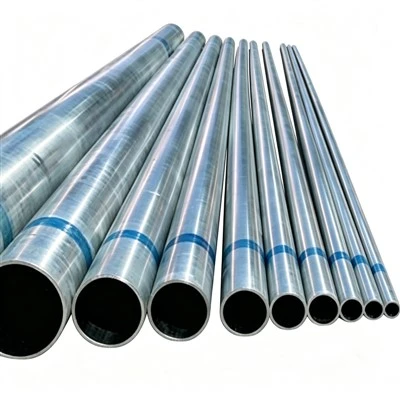
First off, the material is super important. The base material of steel pipes usually comes from different grades of steel. For example, carbon steel is one of the most common types. It’s got a good balance of strength and cost. High – quality carbon steel pipes should have a proper carbon content. If the carbon content is too high, the pipes can become brittle, which means they’re more likely to crack under stress. On the other hand, if it’s too low, the pipes might not have enough strength.
Alloy steel pipes are another story. They’re made by adding other elements like chromium, nickel, or molybdenum to the base steel. These added elements can enhance certain properties of the pipes. For instance, chromium can improve the pipe’s corrosion resistance. So, when we’re looking at alloy steel pipes, we need to make sure the alloying elements are in the right proportions. A well – made alloy steel pipe can withstand harsh environments, like in chemical plants or offshore oil rigs.
The manufacturing process also plays a huge part in determining the quality of steel pipes. There are two main methods: seamless and welded.
Seamless steel pipes are made by piercing a solid billet of steel. This process creates a pipe without any weld seams. Seamless pipes are generally stronger and more reliable, especially for high – pressure applications. For example, in the oil and gas industry, where pipes need to carry oil or gas under high pressure over long distances, seamless pipes are often the go – to choice. The quality of seamless pipes depends on how well the piercing process is done. If there are any defects during the piercing, like uneven wall thickness or internal cracks, it can significantly reduce the pipe’s performance.
Welded steel pipes, as the name suggests, are made by welding a flat steel strip or plate into a tubular shape. There are different types of welding methods, such as electric resistance welding (ERW) and submerged arc welding (SAW). ERW pipes are commonly used for general applications, like water supply or structural purposes. The quality of welded pipes depends on the quality of the weld. A good weld should be strong and free of defects like porosity or lack of fusion. If the weld is weak, the pipe can fail under pressure, which is a big no – no.
Wall thickness is a crucial quality factor. The wall thickness of a steel pipe needs to be uniform throughout its length. If the wall thickness varies too much, it can cause stress concentrations in the thinner areas. This can lead to premature failure of the pipe, especially under pressure or when the pipe is subjected to external forces. We use special measuring tools to check the wall thickness of each pipe. Any pipe that doesn’t meet the specified wall thickness tolerance is rejected.
Surface finish is also something we can’t overlook. A smooth surface finish not only looks good but also has practical benefits. For example, in pipes used for transporting fluids, a smooth surface reduces friction, which means less energy is required to move the fluid through the pipe. It also helps prevent the buildup of deposits on the inner surface of the pipe, which can clog the pipe over time. We make sure our pipes are free of rust, scale, and other surface defects.
Dimensional accuracy is key. The outer diameter, inner diameter, and length of the steel pipe need to meet the customer’s specifications. Even a small deviation in these dimensions can cause problems during installation. For example, if the outer diameter of a pipe is too large, it might not fit into the fittings or connections. We have strict quality control measures in place to ensure that our pipes are within the specified dimensional tolerances.
Corrosion resistance is a major concern, especially for pipes that are going to be used in corrosive environments. We can improve the corrosion resistance of steel pipes through various methods. One common way is to apply a protective coating, like epoxy or zinc. Epoxy coatings can provide a strong barrier against corrosion, while zinc coatings work through a process called galvanization. Galvanized steel pipes are widely used in outdoor applications, like in water distribution systems or in construction projects where the pipes are exposed to the elements.
Mechanical properties are also essential. We test the steel pipes for properties like tensile strength, yield strength, and elongation. Tensile strength tells us how much pulling force the pipe can withstand before it breaks. Yield strength is the point at which the pipe starts to deform permanently under stress. Elongation measures how much the pipe can stretch before it fails. These properties are important for ensuring that the pipes can perform well under different operating conditions.
Now, you might be wondering how we ensure that our steel pipes meet all these quality standards. Well, we have a comprehensive quality control system in place. From the moment the raw materials arrive at our factory, we start testing them. We check the chemical composition of the steel, its physical properties, and its surface quality. During the manufacturing process, we conduct in – process inspections at different stages to make sure everything is going according to plan.
After the pipes are made, we perform a series of final tests. We use non – destructive testing methods, like ultrasonic testing and magnetic particle testing, to detect any internal or surface defects. We also do hydrostatic testing, where we fill the pipes with water and apply pressure to check for leaks and to ensure that the pipes can withstand the specified pressure.
As a steel pipe supplier, we understand that quality is our top priority. Our customers rely on us to provide them with high – quality steel pipes that can meet their specific needs. Whether it’s for a small construction project or a large – scale industrial application, we make sure that our pipes are of the best quality.

If you’re in the market for steel pipes and you want to make sure you’re getting the best quality, don’t hesitate to reach out to us. We can provide you with detailed information about our products, answer any questions you might have, and even offer customized solutions. We’re here to help you find the perfect steel pipes for your project. So, let’s start a conversation and see how we can work together.
Steel Pipe References
- "Steel Pipe Handbook", various industry experts’ contributions
- "Manufacturing and Quality Control of Steel Products", industry – specific research papers
Shenzhen Gangyuanlong Building Materials Co., Ltd.
As one of the most professional steel pipe manufacturers and suppliers in China, we also support customized service with low price. Please feel free to wholesale premium steel pipe in stock here from our factory. Also, quotation is available.
Address: No. 10-1, Jinlong 4th Road, Baolong Community, Longgang Subdistrict, Longgang District, Shenzhen
E-mail: szgylco@gmail.com
WebSite: https://www.szgylco.com/
