If you’re a jeweler browsing 3D scanners for your workshop, you’ve probably Googled “jewelry 3D scanner service life” at 2 a.m. (no judgment—been there). I run a small, no-BS jewelry 3D scanner supply business, so this question lands in my inbox almost every week. The short answer? It’s not a one-size-fits-all number. It depends on how you use it, how you maintain it, and even if you buy a budget model vs. something built for daily 12-hour shifts. Let’s break this down like we’re chatting over coffee (no stuffy technical jargon, promise). Jewelry 3D Scanner
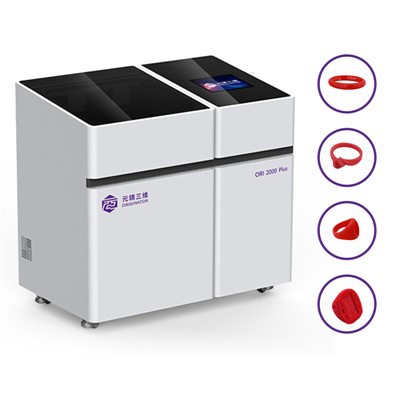
First, let’s get real about what “service life” actually means here. For our scanners, we don’t count how long it runs until it dies suddenly—we count how long it stays accurate enough to scan tiny, intricate jewelry pieces (think a 1mm diamond setting or filigree rings) without blurs or warps. That accuracy is everything: if a scanner starts cutting corners on detail, you can’t design a custom engagement ring, cast a perfect wax model, or fix a heirloom piece right. So service life, for our purposes, is the sweet spot of reliable, precise scanning.
Let’s start with the average range, because that’s what most people actually want to know. For entry-level scanners (the kind made for hobbyists, small jewelry businesses that scan 2-3 pieces a day), you’re looking at 5-7 years of consistent accuracy. Now, our industrial-grade scanners (built for high-volume shops that run 8+ hours a day, scan 10+ pieces daily, maybe even handle bulk scans for production) clock in at 10-15 years. Wait, why such a big gap? Let’s talk about the parts that wear out—because that’s where the difference is.
The most critical part of any jewelry 3D scanner? The camera sensor and the projection system. Entry-level models use cheaper CMOS sensors and LED projectors that aren’t calibrated for heavy use. If you’re only scanning a ring once a week, those parts will hold up. But if you’re scanning 50 pairs of earrings a day, the LED bulbs burn out faster (they don’t just stop working—their brightness fades, which messes with scan clarity) and the sensor’s pixels can get worn out from constant exposure to the same projection patterns. Industrial scanners use high-grade CMOS with sealed housings and professional projectors built for long runs—we’ve had shops use our high-volume models for 12 years without needing to replace those core parts, as long as they do regular maintenance.
Next up: moving parts. Most jewelry scanners have a rotation stage (the little platform that spins your piece so the scanner can capture every angle) and a linear axis for taller items like pendants. These are mechanical parts, so they wear down over time. Entry-level scanners use plastic or low-grade metal gears—if you’re rotating the stage 100 times a day, those gears can strip in 3-4 years, which throws off the scan alignment. Our scanners, even the entry-level ones, use precision ball bearings and stainless steel gears. That’s not cheap, but it means the rotation stage stays smooth for a lot longer. We’ve had a customer run our mid-range model 6 hours a day, 5 days a week for 8 years—they only had to replace a $50 bearing last year, not the whole scanner.
Wait, but service life isn’t just about hardware. It’s also about software and calibration. That’s where a lot of people slip up. Even the best hardware will start acting wonky if you don’t calibrate it regularly. For our scanners, we recommend calibration every 3 months (or after moving it—like if you shift it from your workshop to a trade show). Calibration fixes any small shifts in the camera alignment, so scans stay accurate. If you skip that, your 10-year scanner might start giving blurry scans in 2 years, which makes it feel like it’s reached the end of its life way earlier than it should. Also, software updates—old scanners with outdated software can’t handle the new file formats that modern jewelry design tools use, which makes them functionally obsolete even if they still scan well. That’s why we offer free software updates for life to all our customers—we don’t want their scanner to become a paperweight because it can’t work with their design software.
Now, let’s talk about the things that cut service life short, because this is stuff you can control. First, overloading the scanner. A lot of new jewelers buy a high-volume scanner and try to run it 24/7 without letting it cool down. That’s a bad call. Scanners get hot, especially the projection and sensor parts. If you leave it running non-stop, the internal components degrade way faster. We tell our customers to give the scanner a 15-minute break every 4 hours, and to turn it off when they’re done for the day. I’ve had a customer who ran an entry-level model 10 hours a day, 6 days a week for 3 years because she was rushing to fill custom orders—she had to replace the sensor 2 years early because she never turned it off.
Second, neglecting cleaning. Jewelry scanners get dusty, especially if you’re working in a workshop with wax shavings, solder fumes, or metal dust. Those tiny particles can get on the lens of the camera or projector, or inside the rotation stage. If you don’t clean those off, they scratch the lens or gum up the gears. We give every customer a free cleaning kit when they buy a scanner, and we post 1-minute tutorial videos on our YouTube channel about how to clean it properly (no harsh chemicals, just a microfiber cloth and compressed air). A customer of ours who works with a lot of metal dust cleans her scanner every week, and it’s been going strong for 9 years now—she barely has any issues.
Third, improper handling. If you move your scanner around a lot, or bump it into workbenches, that can throw off the calibration or damage the moving parts. We recommend placing your scanner on a sturdy, level table and leaving it there once it’s calibrated. If you do need to move it, we give detailed step-by-step guides to recalibrate it after moving—skipping that means your scans will be off, even if the scanner is physically fine.
Wait, what about budget vs. premium scanners? Let’s be clear: you get what you pay for, but that doesn’t mean entry-level is garbage. If you’re a hobbyist who only scans a few pieces a month, our entry-level model will easily last you 7 years. If you’re a small to mid-sized jeweler with 2-3 workers, our mid-range scanner (which is built for 5 hours a day) lasts 8-10 years. The industrial ones? For big production shops with 10+ workers, it’s 12-15 years. We had a customer use our first-gen industrial scanner for 13 years before they upgraded—they said it was still accurate, but they wanted a scanner that could handle larger pieces. That’s the kind of longevity we pride ourselves on, not the kind that breaks after 2 years.
Also, let’s address the myth that scanners become obsolete after 5 years. We see this a lot—people thinking they have to replace their scanner every 5 years just because it’s “old tech.” But that’s not true, as long as the core parts are working and the software is still supported. We’ve had customers with scanners from 2012 that still work perfectly, because we still update the software to work with modern design tools. The only time a scanner is truly at the end of its service life is if the core parts (camera, projection) are damaged beyond repair, or the software is no longer supported.
Now, let’s talk about how to make your scanner last as long as possible. It’s simple, and we walk every customer through this when they buy: 1) Don’t overwork it—follow the load guidelines, 2) Clean it every week (we send a reminder email for 3 months after purchase), 3) Calibrate it every 3 months (we have a one-click calibration tool that takes 2 minutes), 4) Turn it off when you’re done, 5) Don’t move it unless you absolutely have to, and if you do, recalibrate it. We also offer a annual maintenance check for a small fee—our techs come to your workshop, clean it inside and out, check the gears, calibrate it, and update the software. A lot of customers do this, and their scanners end up lasting 2-3 years longer than the average.
Wait, let’s throw in a real customer story to make this concrete. Last month, a guy named Mike from a small custom jewelry shop in Ohio reached out to us. He’d bought our entry-level scanner in 2015, used it 4 hours a day, 5 days a week, for his custom rings and necklaces. He said it was still scanning as accurately as the day he bought it—he’d only replaced the rotation stage gear once in 2022, after he had a wax spill that got into the stage. He told us he was thinking about upgrading to a higher-volume model because his shop grew, and he joked that he didn’t want his current scanner to get lonely sitting in the back. That’s the kind of feedback we love—our scanners aren’t just tools, they’re reliable workhorses that stick around.
So, to circle back to the original question: what’s the service life of a jewelry 3D scanner? It’s not a number that’s set in stone—it’s a range that depends on how you use, maintain, and care for it. For most jewelers, you can expect 5-15 years of reliable, accurate scanning, with the right care. If you buy a cheap, no-name scanner from a big box store that’s made for general use, you might get 2-3 years max. But if you invest in a scanner built for jewelry, and follow basic maintenance, it will pay for itself many times over before it even starts to slow down.

Now, if you’re ready to stop stressing about how long your scanner will last and find one that fits your shop’s needs, hit us up to chat. We don’t do pushy sales calls—we’ll ask you how many pieces you scan a day, what kind of jewelry you make, and help you pick the right model, whether you’re a hobbyist just starting out or a production shop that needs a workhorse. No hidden fees, no jargon, just straight talk about scanners that last.
MJP 3D Printer References
- 3D Printing Industry. (2022). “Service Life of Industrial 3D Scanners: A Guide for Manufacturing Users.”
- Journal of Jewelry Technology. (2021). “Calibration and Maintenance Practices for Precision 3D Scanning in Jewelry Workshops.”
- International Organization for Standardization (ISO). (2019). “ISO 17151:2019 – Geometrical Product Specifications (GPS) – 3D Imaging Systems – Accuracy of 3D Scanners.”
Hangzhou Originator 3D Technology Co., Ltd.
Hangzhou Originator 3D Technology Co., Ltd. is one of the most experienced jewelry 3d scanner manufacturers and suppliers in China. With abundant experience, we warmly welcome you to wholesale high quality jewelry 3d scanner made in China here from our factory. Contact us for more details.
Address: Room 403, Building 2, Block B, Heda Incubation Park,No. 452, 6th Avenue, Xiasha, Qiantang District,Hangzhou, Zhejiang, China
E-mail: Sales@originator3d.com
WebSite: https://www.originator3d.com/
