Hey there! I’m in the filter press business, and one question I get asked a lot is, "What is the pressure range of a filter press?" Well, let’s dive right into it. Filter Press
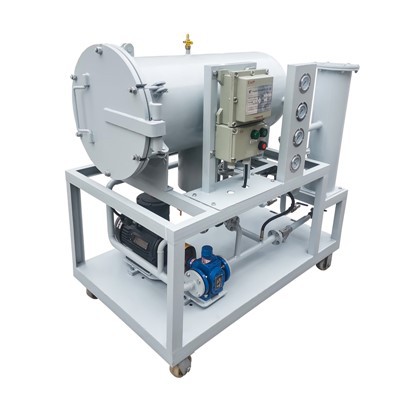
First off, the pressure range of a filter press can vary quite a bit depending on a bunch of factors. The most common pressure range for standard filter presses is between 75 and 200 psi (pounds per square inch). But hey, that’s just a general ballpark. Some smaller, more basic filter presses might operate at lower pressures, say around 50 psi. These are often used in small – scale operations or for less demanding filtration tasks.
On the other hand, there are high – performance filter presses that can go way beyond the 200 psi mark. In fact, some industrial – grade filter presses can reach pressures of up to 1000 psi or even higher. These are typically used in heavy – duty applications like mining, chemical processing, and wastewater treatment.
Now, let me break down why these different pressure ranges exist. The pressure in a filter press is what forces the liquid through the filter media and separates it from the solids. For applications where the solids are easy to separate and the liquid has a low viscosity, a lower pressure might be sufficient. For example, in a food processing plant where they’re filtering fruit juices, a pressure of around 75 – 100 psi could do the job just fine. The juice can easily pass through the filter cloth, and there’s no need to crank up the pressure.
But when you’re dealing with thick slurries or materials that are really hard to separate, you need more pressure. Take the mining industry, for instance. They often have to deal with thick, sticky ore slurries. To get the water out of these slurries and leave behind the valuable minerals, they need high – pressure filter presses. The high pressure helps to squeeze out every last drop of liquid, resulting in a drier cake of solids.
Another factor that affects the pressure range is the type of filter press. There are different designs, like plate and frame filter presses, membrane filter presses, and chamber filter presses. Plate and frame filter presses are one of the oldest and most common types. They usually operate in the mid – pressure range, around 100 – 150 psi. Membrane filter presses, on the other hand, can achieve higher pressures because of their unique design. The membranes can expand and apply additional pressure to the filter cake, which is great for getting a drier cake. These can operate anywhere from 150 to 1000 psi.
Chamber filter presses are also quite versatile. They can be adjusted to different pressure levels depending on the application. In general, they can work in a pressure range similar to plate and frame filter presses, but with some modifications, they can also handle higher pressures.
Let’s talk about how the pressure affects the filtration process. When you increase the pressure, the filtration rate usually goes up. That means you can process more material in a shorter amount of time. But there’s a catch. If you increase the pressure too much, it can cause the filter media to clog more quickly. The high pressure can force small particles into the pores of the filter cloth, reducing its efficiency. So, it’s all about finding the right balance.
As a filter press supplier, I’ve seen firsthand how important it is to choose the right pressure range for a specific application. We work closely with our customers to understand their needs. We ask them about the type of material they’re filtering, the volume of material, and their desired end – product. Based on this information, we can recommend the appropriate filter press and pressure range.
For example, if a customer is in the pharmaceutical industry and needs to filter a fine – particle suspension, we might recommend a lower – pressure filter press with a high – quality filter cloth. This will ensure that the product is filtered gently and without losing any of its valuable components.
On the other hand, if a customer is in the oil and gas industry and needs to separate oil from sludge, a high – pressure membrane filter press might be the way to go. The high pressure will help to break down the emulsion and separate the oil from the solids more effectively.
We also offer custom – built filter presses. If a customer has unique requirements that can’t be met by our standard models, we can design and build a filter press that’s tailored to their specific needs. This includes determining the right pressure range for their application.
So, if you’re in the market for a filter press, don’t just focus on the price or the brand. Think about the pressure range and how it will affect your filtration process. A filter press with the wrong pressure range can lead to inefficiencies, higher operating costs, and lower – quality end products.
If you’re interested in learning more about filter presses and finding the right pressure range for your application, we’d love to hear from you. We have a team of experts who can answer all your questions and help you make an informed decision. Whether you’re a small business just starting out or a large industrial operation, we have the solutions for you.

Don’t hesitate to reach out to us to discuss your filtration needs. We’re here to make sure you get the best filter press for your money and that it performs at its best. Contact us today to start the conversation and see how we can help you with your filtration challenges.
Filter Press References:
- "Filtration and Separation Handbook" – A comprehensive guide on filtration processes and equipment.
- Industry reports on filter press applications in various sectors such as mining, chemical, and food processing.
Chongqing TOP Oil Purifier Co., Ltd.
Chongqing TOP Oil Purifier Co., Ltd. is one of the most experienced filter press manufacturers and suppliers in China. Please rest assured to buy CE approved filter press made in China here from our factory. We also accept customized orders.
Address: No.1, Jianlong North Rd, Jiulongpo District, Chongqing, China
E-mail: sales@topoilpurifier.com
WebSite: https://www.xboilpurifier.com/
